


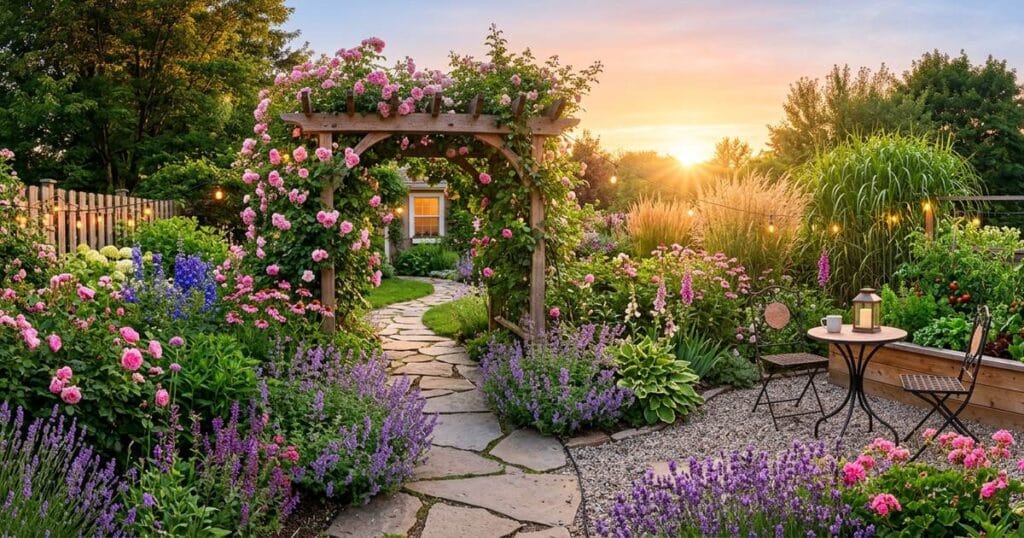
A beautiful garden isn’t about having more space or a bigger budget — it’s about a handful of smart design decisions repeated with confidence. The best garden design ideas work because they create structure first and decoration second: defined beds, clear paths, a focal point, and somewhere comfortable to sit and enjoy it all. Before you buy a single plant, sketch your yard and mark the sunny zones, the soggy corners, and where you actually walk — five minutes of planning saves a season of moving things. Whether your backyard is a compact patio or a wide-open lawn, the ten ideas below scale up or down gracefully, and each one lists the difficulty, budget, and key elements so you can plan before you dig. Several are wonderfully DIY-friendly too — raised beds, trellises, and pergolas are weekend builds for anyone handy with a saw. Ready to design a garden that looks intentional in every season? Let’s walk through the ideas.
1. Layered Planting Beds
Professional borders look lush because they’re planted in layers, and the recipe is simple: tall “thrillers” at the back, bushy “fillers” in the middle, and trailing “spillers” at the front edge. Repeat the same three or four plants in drifts down the bed rather than scattering singles — repetition is what reads as design instead of randomness. Aim for overlapping bloom seasons in every bed — spring bulbs, summer perennials, autumn grasses — so the show never fully stops. Add a crisp spade-cut edge along the lawn, and even modest plantings instantly look curated.
- Difficulty: Easy
- Budget: $100–$300 per bed
- Key elements: Thriller, filler and spiller plants, spade-cut edge, mulch

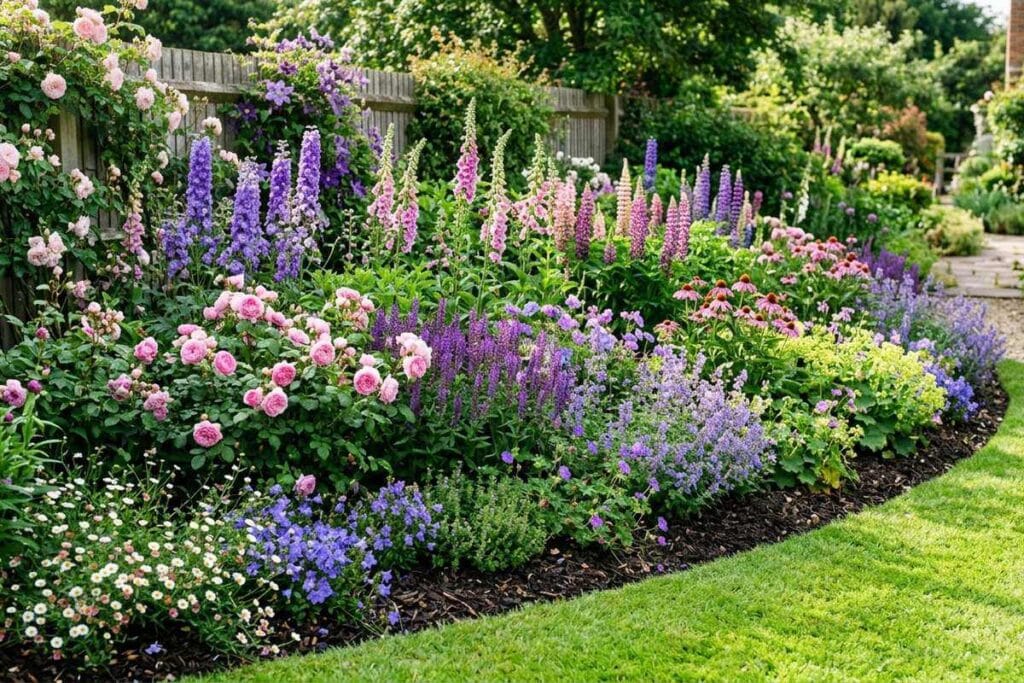
Alt text: “Layered planting bed, a foundational garden design idea for lush borders.”
2. Raised Wooden Garden Beds
Raised beds are the hardest-working upgrade in garden design: they define space, improve drainage, warm earlier in spring, and look tidy year-round. Cedar or redwood beds two boards high suit flowers and vegetables alike, and building your own is a satisfying weekend woodwork — boards, corner posts, galvanized screws, done. Keep beds no wider than four feet so you can reach the middle from either side; building too wide to weed comfortably is the classic first-timer mistake. Line the base with cardboard before filling to smother weeds, and mulch the tops for a clean, finished look that also saves water.
- Difficulty: Easy to moderate DIY
- Budget: $60–$150 per bed
- Key elements: Cedar boards, corner posts, galvanized screws, quality soil mix, mulch
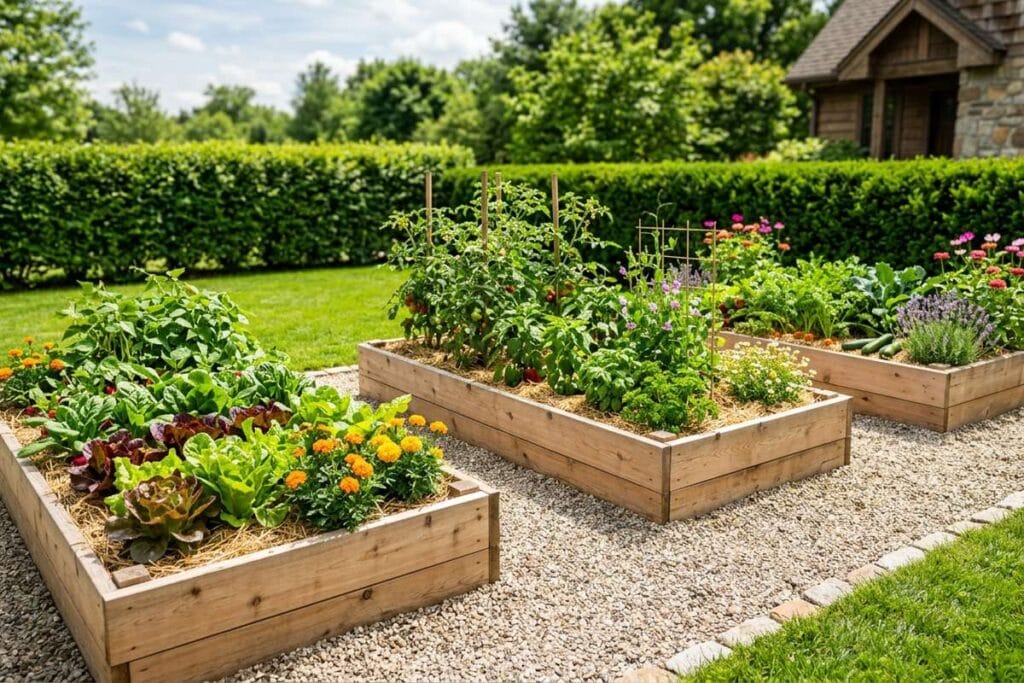
Alt text: “Raised wooden garden beds, a DIY-friendly garden design idea.”
3. Gravel and Stepping-Stone Pathways
Paths are the bones of a garden — they tell visitors where to look and where to wander. A gravel path with large stepping stones costs a fraction of paving and drains beautifully in wet climates. Outline the route with a garden hose first, excavate a few inches, lay landscape fabric, then add gravel and nestle stones at a natural walking stride. Steel or brick edging keeps everything crisp, and the crunch underfoot is free garden ambiance. If the path crosses a damp spot, build it up slightly and crown the gravel so rain sheets off instead of pooling underfoot.
- Difficulty: Moderate
- Budget: $3–$8 per linear foot
- Key elements: Landscape fabric, gravel, flagstone or pavers, steel edging
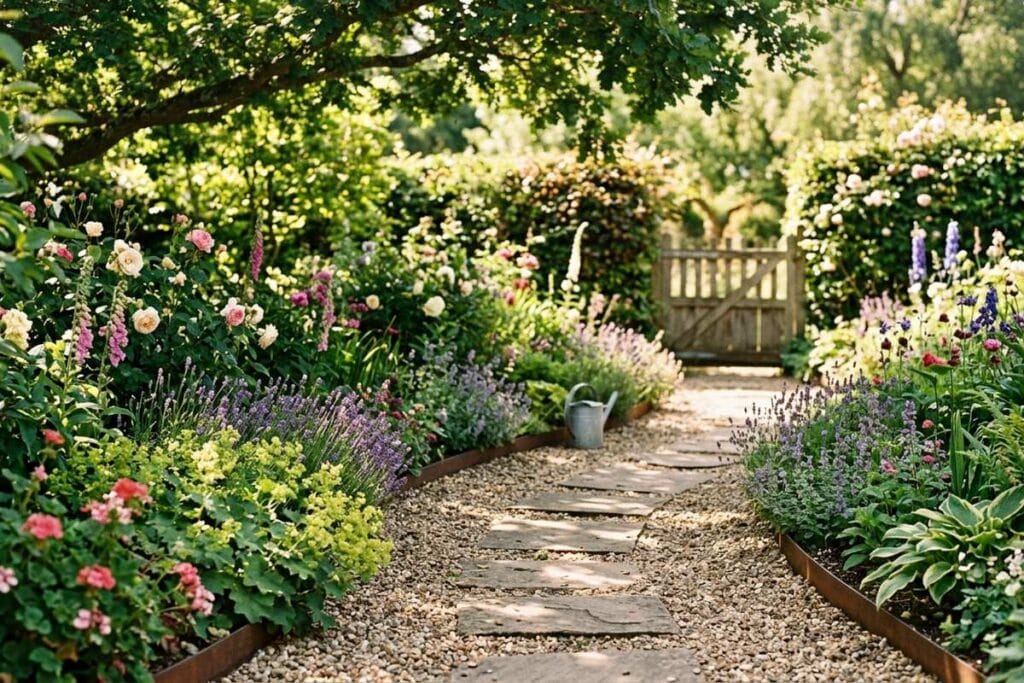
Alt text: “Stepping stone pathway, a structure-building garden design idea.”
4. A Pergola or Arbor Focal Point
Every memorable garden has a destination, and a wooden pergola or arbor creates one instantly — a framed view, a shaded seat, or a gateway between garden “rooms.” Trained with climbing roses, jasmine, or grapevines, it softens into a living structure within two seasons. For DIYers, a basic four-post pergola is very achievable: posts in concrete, beams, rafters, and galvanized hardware. Check the late-afternoon sun angle before you set posts — the shade should land where you plan to sit at 5 pm, not where you happened to be standing at noon. It’s the kind of anchor project that makes everything around it look deliberate.
- Difficulty: Moderate DIY
- Budget: $400–$1,500 depending on size
- Key elements: 4×4 or 6×6 posts, beams and rafters, post anchors, climbing plants
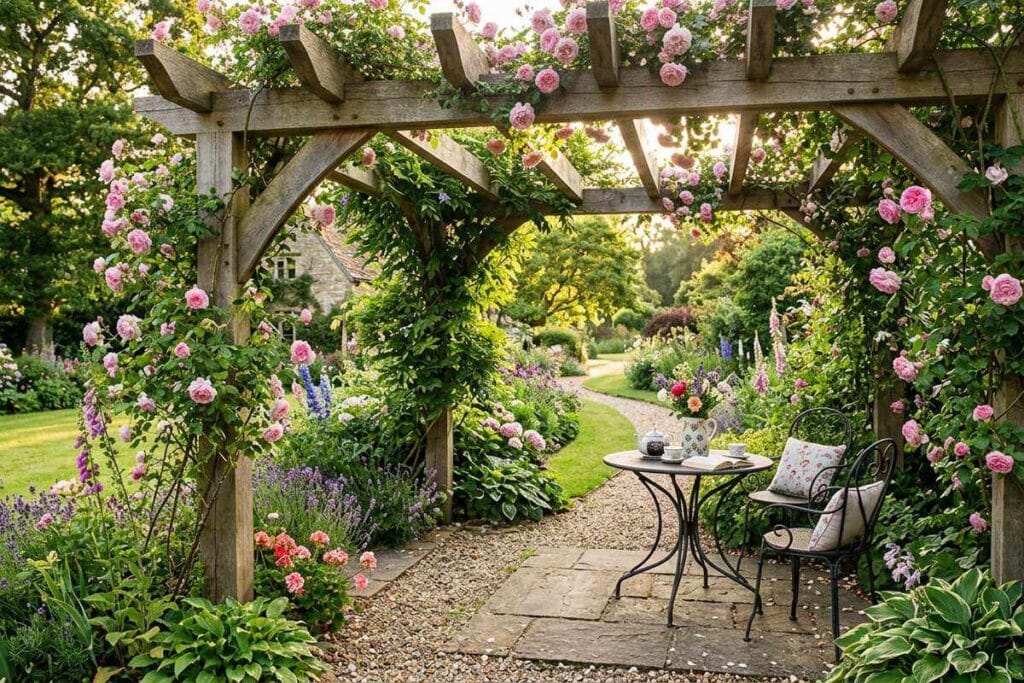
Alt text: “Wooden pergola focal point, a statement garden design idea.”
5. Vertical Gardens and Trellises
When floor space is precious, grow up. Trellises, obelisks, and wall-mounted planters multiply your planting area while adding privacy screening and vertical drama. A simple wooden trellis against a fence turns a blank boundary into a flowering feature wall; obelisks give height to flat vegetable beds; gutter planters train strawberries down a sunny wall. Paint or stain woodwork to match your furniture so the vertical elements read as one coordinated design. Anchor anything taller than a person securely, though — a fully leafed trellis catches wind like a sail in summer storms.
- Difficulty: Easy DIY
- Budget: $30–$150 per structure
- Key elements: Wooden trellis or obelisks, wall planters, climbing plants, exterior stain
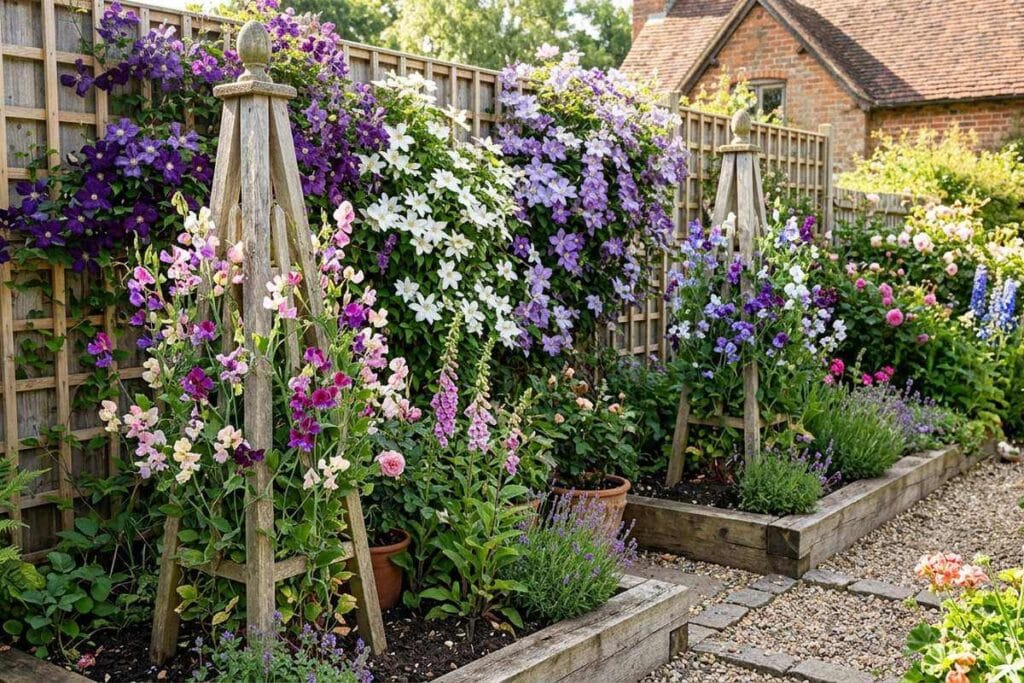
Alt text: “Vertical gardening with trellises, a space-saving garden design idea.”
6. Layered Outdoor Lighting
Gardens should work the evening shift too, and lighting is what transforms a nice yard into a magical one. Think in three layers: path lights for safety, uplights to dramatize trees or the pergola, and string or bistro lights for warm overhead glow. Solar fixtures have improved enormously — no wiring needed — while low-voltage LED kits are an easy weekend install. Aim for sparkle, not stadium: five soft sources beat one blinding floodlight every time. Put string lights on a simple plug-in timer, and the garden switches itself on at dusk without you lifting a finger.
- Difficulty: Easy
- Budget: $50–$300
- Key elements: Solar path lights, uplights, string lights, optional low-voltage kit
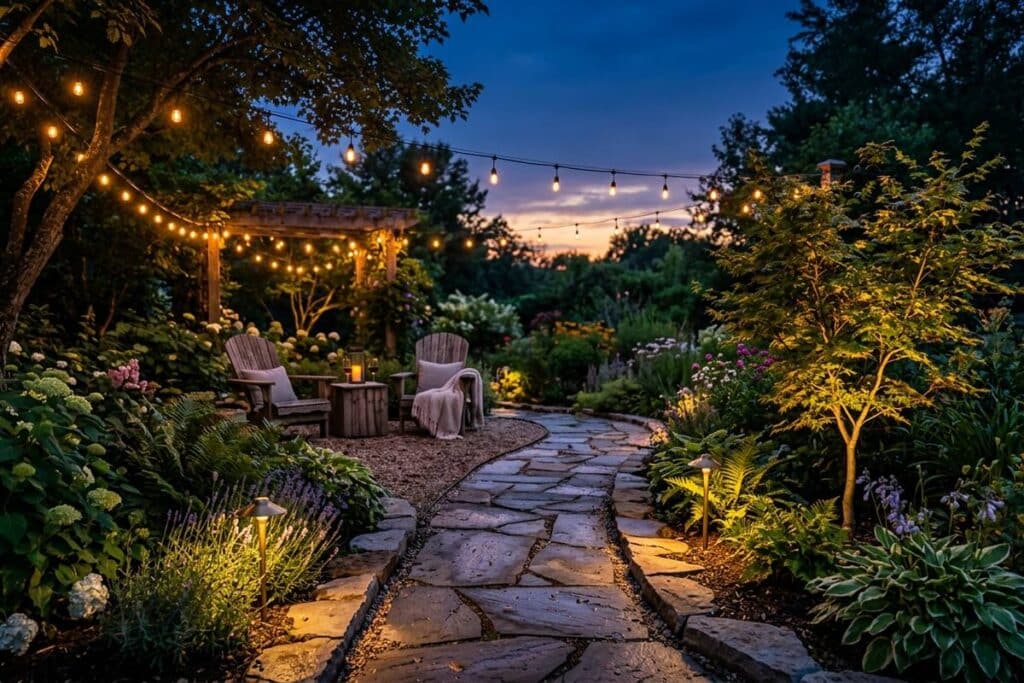
Alt text: “Layered garden lighting, an atmosphere-building garden design idea.”
7. Container Garden Clusters
Containers are the garden’s movable furniture — and the secret to making them look designed rather than random is clustering in odd numbers with varied heights. Group three pots of different sizes, repeating one plant or color across the cluster so it reads as a single composition. Terracotta warms a cottage scheme; matte black modernizes a patio instantly. Raise pots on hidden feet for drainage, and flank doorways with matching pairs wherever you want instant symmetry. In hot climates, favor light-colored containers — black pots bake roots by midsummer.
- Difficulty: Easy
- Budget: $40–$200 per cluster
- Key elements: Three varied-height pots, repeated plants, pot feet, quality potting mix
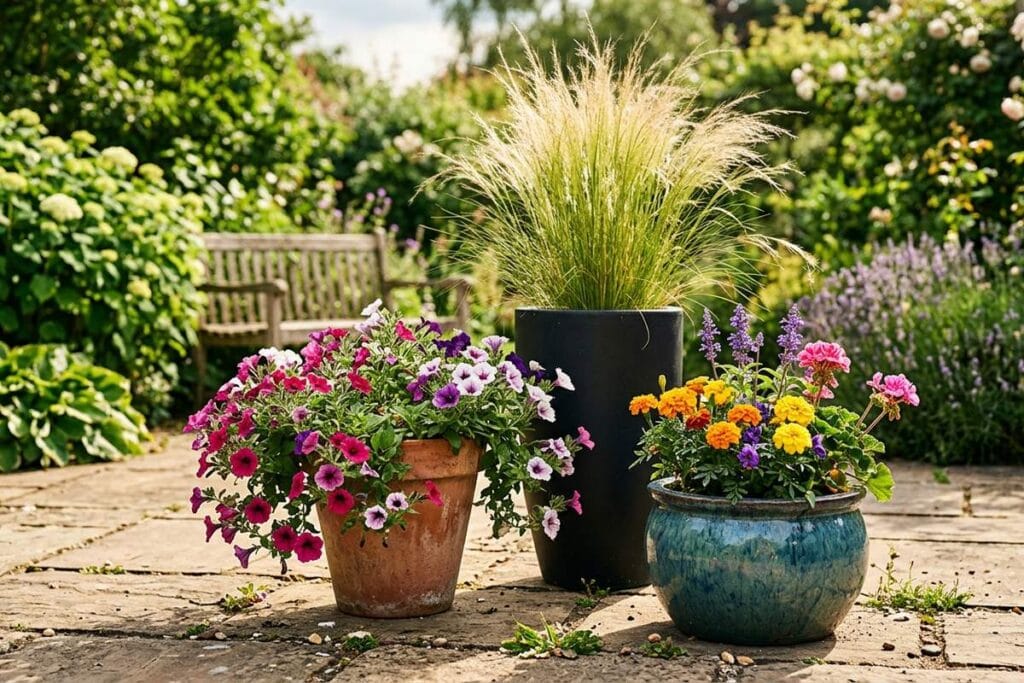
Alt text: “Container garden clusters, a flexible garden design idea for patios.”
8. A Small Water Feature Corner
Moving water adds the one element planting can’t provide: sound. A compact bubbling fountain or a half-barrel pond with a spitter mask traffic noise and pulls birds into the garden like a magnet. Modern self-contained fountains need no plumbing — just a reservoir, a small pump, and a power point. Surround the feature with moisture-loving ferns and hostas and a couple of flat stones, and you’ve built a destination corner that whispers “spa.” Top up the reservoir weekly in summer — small volumes evaporate fast — and drain the pump before the first hard freeze in cold climates.
- Difficulty: Easy to moderate
- Budget: $100–$500
- Key elements: Self-contained fountain or barrel pond, pump, ferns and hostas, flat stones
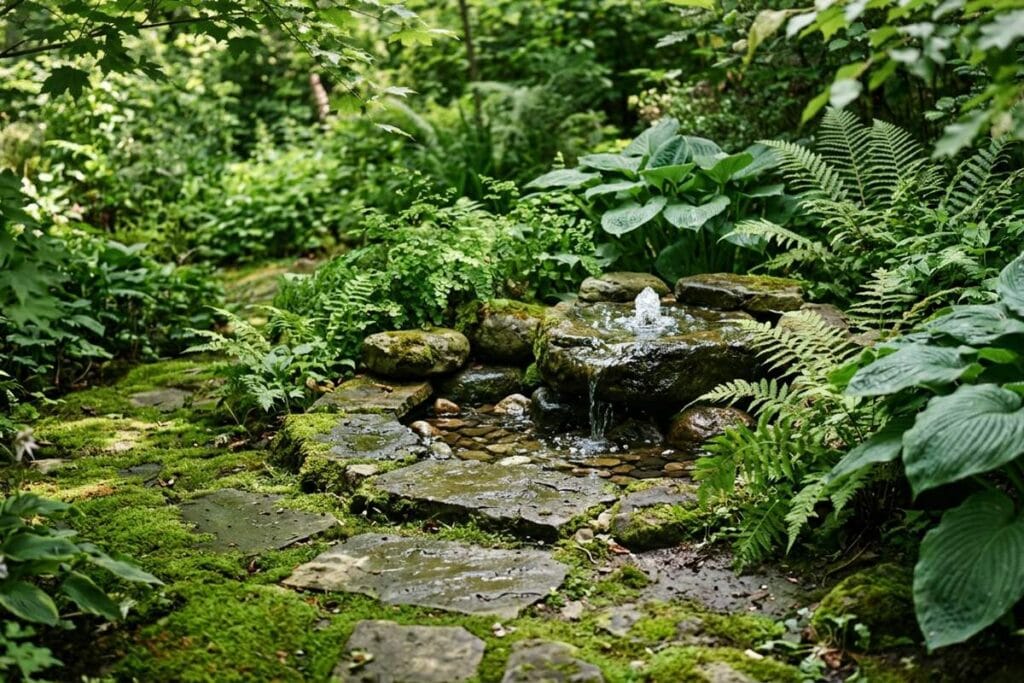
Alt text: “Small garden water feature, a sensory garden design idea.”
9. Cozy Seating Nook or Fire Pit Zone
A garden earns its keep when it gives you somewhere to sit with morning coffee or evening company. Carve a nook from an overlooked corner: a gravel pad, two chairs and a small table, something overhead for enclosure, and planting behind for a sense of seclusion. A portable fire pit or chiminea turns the same nook into a three-season room. The design rule is enclosure on at least two sides — that’s what makes a seat feel like a destination rather than furniture in a field. Choose chairs you genuinely sink into; in a corner you’ll use daily, cushions matter more than style.
- Difficulty: Easy to moderate
- Budget: $150–$600
- Key elements: Gravel pad, two chairs and table, fire pit, screening plants
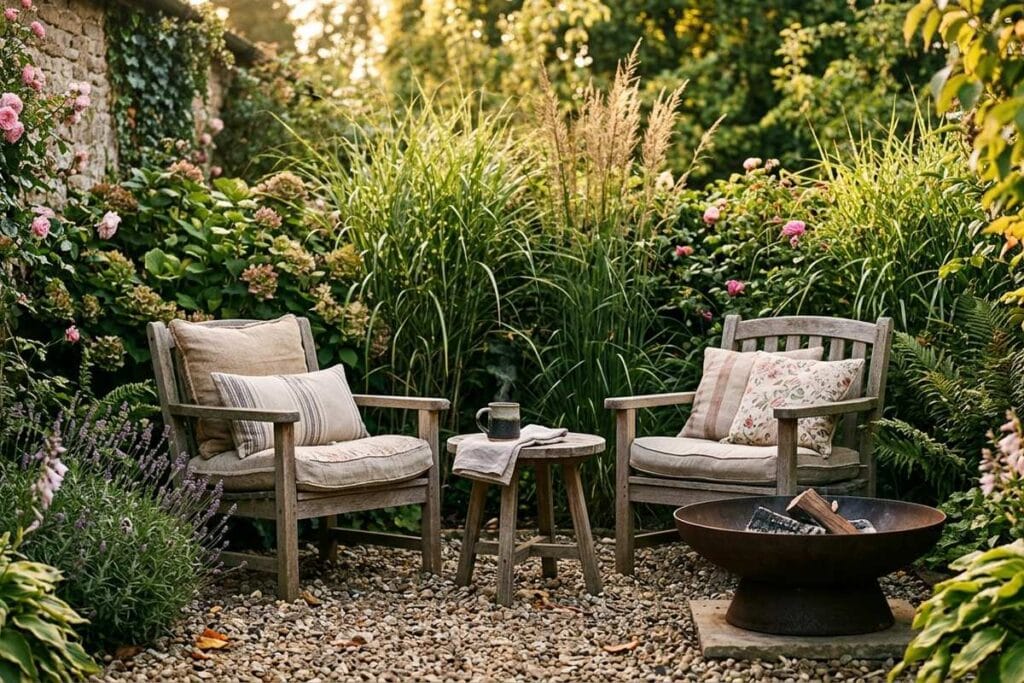
Alt text: “Seating nook with fire pit, a livable garden design idea.”
10. Pollinator-Friendly Wildflower Border
The easiest long bed in the garden is the one nature plants for you. Convert a strip of dull lawn into a pollinator border: sheet-mulch the grass, sow a regional wildflower mix or plant nectar heroes like echinacea, salvia, and lavender in loose drifts, and let it billow a little. The relaxed look is the style — restrained only by one crisp mown edge that signals intent. You’ll trade mowing time for butterflies, bees, and months of color on a watering-can budget. Skip pesticides entirely in this bed — the insects doing the pollinating are the whole point.
- Difficulty: Easy
- Budget: $30–$120
- Key elements: Regional seed mix or nectar perennials, cardboard sheet mulch, crisp mown edge
Conclusion
Great garden design isn’t a mystery — it’s structure, layers, light, and a place to sit, repeated at whatever scale your space allows. Start with one bed or one nook this month, and let each finished corner teach you what the next one wants — most great gardens are built idea by idea, not in a single weekend. If the wooden builds caught your eye — raised beds, trellises, or that pergola — the Ted’s Woodworking plans library includes measured drawings for outdoor projects like these, and our honest Ted’s Woodworking review covers what’s inside before you buy. And subscribe at Home Decor Woodworking for more design ideas and DIY plans. Your dream garden starts with a single spade in the ground — happy designing!