


How to Make a DIY Wooden Plant Stand for Indoor Plants: A Beginner’s Guide
Welcome to the ultimate resource on how to make a DIY wooden plant stand for indoor plants beginners, a project that will completely transform your living space. Incorporating nature into our interior environments has become a cornerstone of modern home design, but finding the exact piece of furniture to elevate your greenery can be an endless and expensive search. When you first start bringing flora indoors, you quickly realize that keeping pots directly on the floor can lead to awkward spacing, a lack of adequate sunlight, and even permanent water damage to your hardwood or carpeted flooring. By choosing to build your own custom DIY wooden plant stand, you gain total control over the dimensions, style, and finish, ensuring a perfect aesthetic match for your unique home decor. This extensive guide is specifically tailored for those who are just starting out, meaning you do not need a fully equipped professional workshop or decades of carpentry experience to achieve a stunning result. We will cover everything comprehensively, from selecting the right beginner-friendly lumber to applying the final coat of protective waterproof sealant. This guarantees that your first foray into woodworking is both highly enjoyable and exceptionally successful. If you have been looking for an engaging weekend activity that yields functional, beautiful, and long-lasting results, you have found the exact right project. Let us dive deep into the exciting world of beginner-friendly woodworking and create a structurally sound, visually stunning display piece for your beloved houseplants.
Key Takeaways for Your DIY Plant Stand Project
- Customization is key: Building your own plant stand allows you to tailor the height specifically to your plant’s sunlight needs.
- Cost-effective decor: DIY woodworking projects are significantly cheaper than purchasing pre-made designer furniture.
- Beginner-friendly tools: You only need basic tools like a saw, drill, sandpaper, and wood glue to complete this build.
- Importance of sealing: Properly sealing your wood protects it from water spills and soil moisture, drastically extending its lifespan.
- Enhanced plant health: Elevating your plants improves air circulation around the foliage and roots, promoting better overall growth.
Why You Should Build Your Own DIY Wooden Plant Stand
There is a profound sense of satisfaction that comes from building functional furniture with your own two hands, especially when it showcases your favorite greenery. Store-bought plant stands often come in rigid, standard sizes that may not fit the specific diameter of your favorite ceramic planter or the exact corner of your living room. When you take the DIY route, you are the master of your own design, allowing you to measure your exact pots and build a stand that cradles them perfectly without any wobbly gaps. Furthermore, engaging in hands-on DIY projects allows you to develop valuable, lifelong practical skills that you can apply to future home improvement tasks. As you progress through this tutorial, you will quickly learn how simple and approachable basic woodworking can be when broken down into manageable steps. By exploring our comprehensive woodworking guides, you can continue to build your confidence and tackle even more ambitious projects in the future. Ultimately, creating your own wooden plant holder DIY style bridges the gap between raw nature and human craftsmanship, adding an authentic, warm, and organic touch to your interior space.
Essential Materials and Tools for Beginners
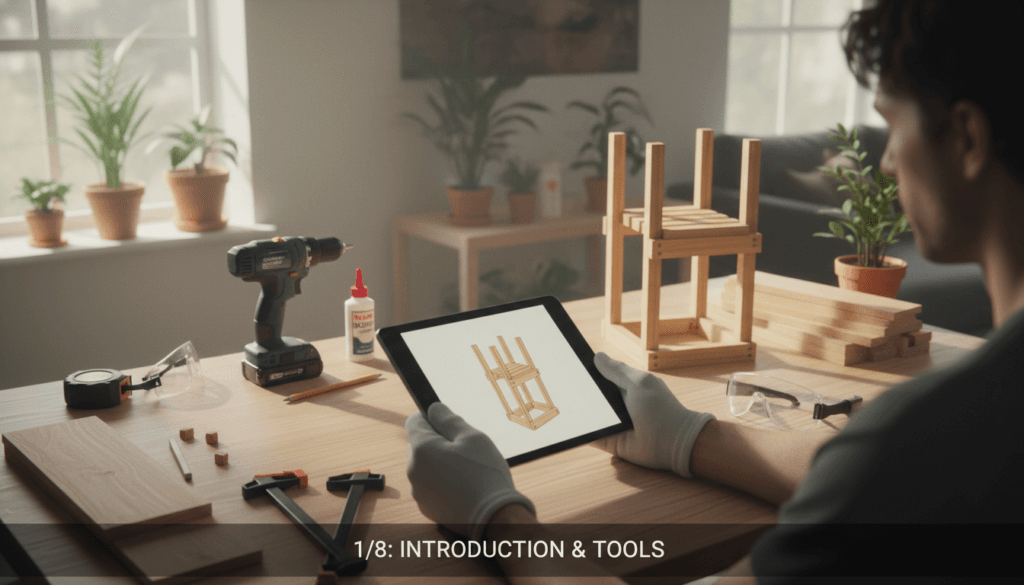
Gathering the correct materials and tools before you begin is the absolute most critical step to ensuring a smooth, frustration-free woodworking experience. As a beginner, it is easy to feel overwhelmed by the sheer variety of equipment available at the local hardware store, but you only need a few foundational items for this specific project. To build a classic, mid-century modern inspired plant stand, you will primarily need square wooden dowels for the legs and a flat wooden board or cross-sections for the base. For the tools, you will require a reliable measuring tape, a combination square for perfect angles, a hand saw or miter saw for cutting, and a power drill for assembly. Additionally, you will need wood glue to reinforce the joints, various grits of sandpaper (such as 120-grit and 220-grit) for smoothing the surfaces, and screws or wooden dowel pins for the final connection. We highly recommend checking out a trusted list of essential woodworking tools to familiarize yourself with the equipment that will serve you well beyond this single project. If you are unsure about which specific brands to purchase, you can always browse our curated list of recommended beginner tools designed specifically for novice home decor builders. Having your workspace organized and all your materials prepped will drastically reduce errors and make the entire building process incredibly rewarding.
Choosing the Right Wood for Your Build
When selecting lumber for your indoor plant stand, it is crucial to consider both the structural durability and the natural grain pattern of the wood. Pine is a universally popular choice for absolute beginners because it is incredibly affordable, remarkably easy to cut with hand tools, and readily available at any local lumberyard. However, if you are looking for a more premium, high-end finish, hardwoods like oak, maple, or walnut offer superior strength and stunning, rich natural colors. Whichever wood species you ultimately choose, ensure that the boards you purchase are perfectly straight and free of deep cracks, warping, or excessive knots that could severely compromise the structural integrity of your build. Taking the extra ten minutes to meticulously hand-pick your lumber at the store will save you from major headaches during the assembly process and ensure your plant stand rests level on the floor. By investing in quality, straight materials upfront, you are laying the physical foundation for a highly successful and beautiful long-term woodworking project.
Step-by-Step Guide: How to Make a DIY Wooden Plant Stand
Now that your materials are sourced and your workspace is fully prepared, it is time to dive into the practical construction phase of your indoor plant stand. The most popular design for beginners is the classic cross-base stand, which features four upright legs connected by an interlocking central ‘X’ base that supports the potted plant. This particular design is structurally robust, visually elegant, and incredibly forgiving for those who are making their very first cuts and joints. Please remember to always prioritize safety by wearing protective safety goggles and a dust mask throughout the cutting and sanding phases to prevent any injuries or inhalation of fine particles. Follow these detailed, sequential steps closely, taking your time to ensure accuracy rather than rushing to the finish line. Patience is the secret ingredient to exceptional woodworking, and measuring meticulously will guarantee that your final product looks like a professionally manufactured piece of home decor.
Step 1: Measuring and Marking Your Wood Accurately
The golden rule of carpentry is to ‘measure twice and cut once,’ a philosophy that will save you both time and expensive materials. Start by measuring the exact diameter of the plant pot you intend to display, adding an extra half-inch of clearance so the pot can easily slide in and out of the stand. Use this vital measurement to determine the length of your central cross-base pieces, which will span the width of your planter. Next, decide on the total height of your plant stand based on how much sunlight your specific indoor plant requires and how it fits visually with your surrounding furniture. Use your combination square and a sharp pencil to draw precise, straight lines across your wooden dowels where you intend to make your cuts. Accurate marking is the undisputed foundation of a sturdy plant stand, as even a quarter-inch discrepancy in leg height will result in a frustratingly wobbly final product. Double-check all of your pencil marks before you even think about picking up your saw.
Step 2: Making Clean Cuts for Your Plant Stand Legs and Base
Executing clean, perfectly straight cuts is essential for ensuring that all the pieces of your wooden plant stand fit together seamlessly without ugly gaps. If you are using a manual hand saw, secure your wood tightly to a stable workbench using heavy-duty C-clamps to prevent the wood from shifting while you saw. For those fortunate enough to have access to a powered miter saw, simply align your pencil mark with the laser or blade guide and make a smooth, steady plunge cut. You will need to cut four identical pieces for the vertical legs, and two pieces for the horizontal cross-base that will eventually interlock in the center. To create the interlocking joint, known as a half-lap joint, you will need to carefully cut a notch precisely in the direct center of both horizontal base pieces. Mastering the half-lap joint is a fantastic beginner woodworking milestone, as it creates an incredibly strong connection that is visually flush and highly professional in appearance. Take your time cutting these notches, as a snug fit is paramount to the overall stability of the plant holder.
Step 3: Sanding the Pieces for a Professional Smooth Finish
Skipping the sanding process is the most common beginner mistake, but thorough sanding is what truly separates a rough DIY project from a sophisticated piece of interior furniture. Start with a medium 120-grit sandpaper to aggressively remove any splinters, rough edges, or unsightly factory machine marks from your raw cut pieces. Always ensure that you are sanding strictly in the same direction as the natural wood grain, as sanding across the grain will leave deep, permanent scratches that become glaringly obvious once you apply stain. After the initial rough sanding, upgrade to a fine 220-grit sandpaper to polish the wood until it feels remarkably smooth and silky to the touch. Pay special attention to the freshly cut ends of your legs, slightly rounding over the sharp, 90-degree corners to create a softer, more modern aesthetic. Once you are entirely satisfied with the smoothness of your wood, use a tack cloth or a lightly damp rag to meticulously wipe away all residual sawdust, ensuring a perfectly clean surface for assembly and finishing.
Step 4: Assembling the Plant Stand Legs and Central Cross-Sections
The assembly phase is where your raw materials finally transform into a recognizable, functional piece of home decor, bringing all your hard work to life. Begin by taking your two carefully notched horizontal base pieces and applying a generous, even layer of high-quality wood glue to the inside of both notches. Slide the two pieces together to form a perfect ‘X’ shape, wiping away any excess glue squeeze-out immediately with a damp cloth before it dries and ruins your future stain. Once the central cross-base is fully dried and rigid, it is time to attach the four vertical legs using a combination of wood glue and strategically placed screws or wooden dowels. If you are using screws, be absolutely certain to pre-drill pilot holes through the legs and into the ends of the cross-base to prevent the wood from violently splitting under pressure. For a truly seamless and professional look, countersink your screws below the surface of the wood and fill the remaining hole with a color-matching wood filler. Allow the entire assembled structure to dry undisturbed overnight in a climate-controlled room to ensure the wood glue reaches its maximum bonding strength.
Step 5: Staining and Sealing the Wood for Water Resistance
Applying the final finish not only profoundly enhances the natural beauty and color of the wood grain but also provides critical protection against inevitable water damage from plant care. Before applying any color, consider using a pre-stain wood conditioner, especially if you are working with porous woods like pine, to ensure an even, blotch-free stain absorption. Apply your chosen wood stain using a clean, lint-free rag or a high-quality bristle brush, letting it soak into the wood fibers for a few minutes before firmly wiping off the excess. If you are looking for top-tier product recommendations, you can research the best wood stains currently available on the market to find a shade that perfectly complements your interior design. After the stain has completely dried according to the manufacturer’s instructions, it is absolutely imperative to apply at least two coats of a clear, waterproof protective sealant, such as polyurethane. Because this stand will hold living plants that require frequent watering, a waterproof polyurethane sealant is the only reliable way to prevent ugly water rings, mold, and long-term rot from destroying your hard work. Lightly sand with 220-grit sandpaper between coats of polyurethane to achieve a flawlessly smooth, glass-like professional finish.
Best Wood Choices for Indoor Plant Stands
Understanding the unique characteristics of different wood species will help you tailor your DIY plant stand to perfectly match your specific budget and aesthetic preferences. As previously mentioned, whitewood and pine are the reigning champions for beginners due to their low cost and workability, though they do require careful staining to look high-end. For a naturally beautiful, warm mid-century modern look, walnut is an unparalleled premium hardwood that requires almost no stain, relying instead on its gorgeous, dark natural grain. White oak is another incredibly popular, durable hardwood that resists moisture exceptionally well, making it a highly practical choice for supporting heavy, recently watered indoor houseplants. Cedar, while typically reserved for outdoor projects due to its natural pest and rot resistance, can also add a wonderfully rustic charm and a pleasant, fresh aroma to indoor spaces. Ultimately, the best wood for your specific indoor gardening decor project is one that fits seamlessly within your budget while providing the necessary structural strength to safely elevate your heavy ceramic pots. If you want to explore more material options for your home, check out our expansive gallery of indoor decor projects for further inspiration.
Common Beginner Woodworking Mistakes to Avoid
Even the most enthusiastic beginners can easily fall into common woodworking traps, but knowing what to look out for will save you significant frustration and wasted materials. The most frequent error is rushing the measuring phase, leading to legs of slightly different lengths and a plant stand that constantly wobbles on flat ground. To completely avoid a wobbly stand, always cut your legs from the exact same piece of lumber simultaneously if possible, or use a stop-block on your miter saw to guarantee identical lengths. Another major mistake is applying thick, globby layers of polyurethane sealant in a rushed attempt to finish the project faster, which inevitably leads to ugly, cloudy drips that ruin the wood’s appearance. Always apply your clear protective finish in very thin, even coats, patiently allowing ample drying time between each application for the most durable and visually appealing result. Finally, failing to clean up wood glue squeeze-out before it cures will create stubborn spots where wood stain absolutely refuses to penetrate, leaving glaring, pale blotches on your final piece.
How to Style Your New Wooden Plant Stand Indoors
Once your DIY wooden plant stand is fully cured and ready for use, the final, most exciting step is integrating it seamlessly into your home’s interior design scheme. A beautifully crafted plant stand deserves to hold an equally beautiful plant, so consider pairing it with visually striking greenery like a cascading Pothos, a vibrant Monstera Deliciosa, or a sleek Snake Plant. [IMAGE_9] Elevating a plant not only draws the eye upward, creating an illusion of higher ceilings, but it also allows trailing plants to elegantly drape their vines downward without bunching up on the floor. For expert advice on arranging your greenery, you can explore professional interior design tips on styling indoor plants to maximize the visual impact of your new creation. Consider building multiple stands of varying heights to create a lush, tiered indoor jungle effect in an empty, sunlit corner of your living room or bedroom. The warm, organic tones of the stained wood will naturally complement the vibrant, living green of the foliage, creating a calming, biophilic environment right inside your home.
Conclusion
Congratulations on successfully learning how to make a DIY wooden plant stand for indoor plants beginners; you have officially unlocked a highly rewarding and practical new skill. By following this detailed, step-by-step woodworking tutorial, you have transformed basic, raw lumber into a stunning, highly functional piece of custom furniture that directly enhances your home decor. [IMAGE_10] Not only have you saved a significant amount of money compared to buying designer retail furniture, but you have also created a personalized piece that is perfectly dimensioned for your specific houseplants. As you continue to care for your indoor garden, your durable, water-resistant wooden stand will reliably elevate your greenery and protect your floors for many years to come. If you encountered any unique challenges during this build or simply want advice on what to create next, do not hesitate to contact our woodworking team for personalized guidance and support. Keep practicing your new skills, stay creative, and enjoy the beautiful, elevated indoor oasis you have built with your own two hands.