


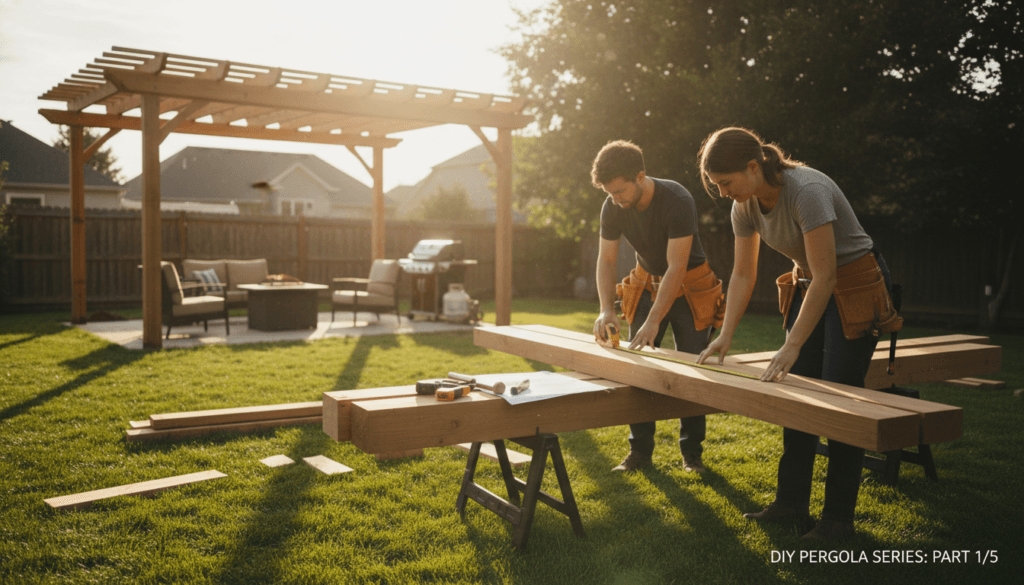
How to Build a Wooden Pergola for Backyard on a Budget: The Ultimate DIY Guide
Creating an outdoor sanctuary does not have to drain your savings account. A wooden pergola is the quintessential backyard addition that offers both aesthetic charm and functional shade. In this comprehensive guide, we will explore the nuances of constructing a professional-grade structure while keeping costs at a minimum. Whether you are a seasoned woodworker or a weekend warrior, this project is achievable with the right planning. Building a pergola on a budget requires a strategic approach to material selection and construction techniques.
Key Takeaways for Your Budget Pergola Project
- Strategic Planning: Proper measurements and a clear site plan prevent costly mistakes.
- Material Choice: Pressure-treated pine offers the best balance of longevity and price.
- Standardized Lumber: Designing around standard lengths (8ft, 10ft, 12ft) reduces expensive waste.
- Simple Foundations: Concrete deck blocks or post-base anchors are more affordable than deep poured footings in many climates.
- DIY Labor: Doing the work yourself is the single greatest cost-saving measure available.
Before you pick up a saw, it is vital to understand what defines this structure. According to Wikipedia, a pergola is an outdoor garden feature forming a shaded walkway, passageway, or sitting area. The open-grid roof allows for air circulation while providing a framework for climbing plants. Unlike a gazebo, which has a closed roof, a pergola emphasizes an airy, open-concept design that integrates perfectly with your existing garden landscape.
Phase 1: Planning and Permitting on a Budget
The most expensive part of any construction project is fixing mistakes made during the planning phase. You must first determine the exact location of your pergola. Consider the sun’s path throughout the day to maximize shade. A well-placed pergola can significantly reduce cooling costs for your home by shading windows and patio doors. Check with your local building department to see if a permit is required for a non-attached structure. Navigating local codes early prevents future fines and legal headaches.
For those looking for professional design advice, you might want to check out our detailed woodworking guides which cover structural basics in more depth. Designing your structure with standard lumber sizes in mind is the secret to a budget-friendly build. If you design a 10’x10′ pergola, you can use standard 10ft boards without cutting off (and throwing away) 2 feet of expensive wood. Always aim for dimensions that minimize off-cuts.
Choosing the Right Wood for Your Budget
When it comes to materials, you have three primary options: Pressure-Treated (PT) Pine, Cedar, and Redwood. For a budget-conscious build, Pressure-Treated Pine is the undisputed champion. It is chemically treated to resist rot, decay, and wood-boring insects. While Cedar is beautiful and naturally rot-resistant, it often costs twice as much as PT pine. You can achieve a high-end look with PT pine by using a quality exterior stain once the wood has dried. Ensure your lumber is certified by organizations like the Forest Stewardship Council to guarantee sustainable sourcing.
Phase 2: Necessary Tools and Material List
To build a professional-grade pergola, you need a specific set of tools, most of which you may already own. If not, consider renting them or buying used to keep the budget tight. Investing in the right fasteners is non-negotiable for structural safety.
The Tool Kit
- Circular Saw or Miter Saw: For precise cuts on beams and rafters.
- Power Drill and Impact Driver: Essential for driving large structural screws.
- Post Hole Digger: Necessary if you are sinking posts into the ground.
- Level (4-foot): To ensure your posts are perfectly plumb.
- Speed Square: For marking 90-degree and 45-degree angles.
The Materials List
Calculating your material needs accurately ensures you only buy what you need. A standard 10×10 pergola usually requires: (4) 4×4 or 6×6 posts, (4) 2×8 support beams, and (7-9) 2×6 rafters. Don’t forget the hardware! Using structural screws like GRK or TimberLOK is faster and more secure than traditional carriage bolts. For more information on sourcing these materials, visit our services page to see how we assist with project material planning.
Phase 3: Step-by-Step Construction Guide
Execution is where your planning meets reality. Follow these steps closely to ensure a sturdy and long-lasting structure. Safety should always be your top priority when working with heavy lumber.
Step 1: Setting the Posts
The foundation is the most critical element of the entire structure. You have two main options: digging holes and pouring concrete or using metal post bases on an existing slab. If you are digging, ensure you go below the frost line to prevent the pergola from shifting during winter. Use a string line to ensure your posts are perfectly aligned. An out-of-alignment post will make it impossible to install the beams and rafters correctly later on.
Step 2: Installing the Support Beams
Support beams are the horizontal members that carry the weight of the rafters. A popular budget technique is to “sandwich” the post between two beams. This creates a strong joint without the need for complex notch cuts. Clamp the beams in place, check for level, and then secure them with structural screws. The beams should extend at least 12 inches past the posts for a classic look.
Step 3: Cutting and Notching Rafters
The rafters provide the characteristic look of the pergola. To save money, you can cut simple decorative ends (like a 45-degree clip) rather than intricate curves. Notching the rafters where they sit on the beams adds significant lateral stability and a professional finish. Use a circular saw to make multiple “kerf cuts” and then clean out the notch with a chisel. This mechanical connection is much stronger than just using nails or screws alone.
Phase 4: Enhancing Aesthetics Without Spending a Fortune
A budget pergola doesn’t have to look cheap. Finishing touches can transform a basic structure into a high-end architectural feature. Staining is the most cost-effective way to improve the appearance of pressure-treated lumber. Wait about 2-6 months for the PT wood to “dry out” before applying a semi-transparent stain. This allows the chemicals to leach out so the stain can penetrate the wood fibers.
For more design inspiration, you can view our gallery or contact us for a consultation on finishing techniques. Adding string lights or sun shades can also enhance the utility of the space. Research from Energy.gov suggests that strategic landscaping and shading can reduce the temperature of your patio area by up to 25 degrees. Integrating climbing plants like wisteria or grapes provides natural, “free” shade over time.
Maintaining Your Budget Pergola
Maintenance is the key to protecting your investment. Even a budget build represents a significant amount of labor and money. Inspect your pergola annually for any signs of wood rot or loose fasteners. Re-staining every 2-3 years will keep the wood protected from UV rays and moisture. According to the American Society of Landscape Architects, well-maintained outdoor structures can significantly increase a home’s resale value.
Common Pitfalls to Avoid
Many DIYers make the mistake of using undersized lumber. While 2x4s are cheaper, they will sag over time under their own weight. Always use at least 2×6 for rafters and 2×8 for support beams. Another common error is failing to use galvanized or stainless steel hardware. Standard steel screws will react with the chemicals in pressure-treated wood and corrode within a few years. Spending a few extra dollars on high-quality fasteners now saves you from a structural failure later. Consistency in your spacing is also vital for the visual appeal of the roof grid.
Conclusion: Your New Backyard Oasis Awaits
Building a wooden pergola on a budget is a rewarding project that combines craftsmanship with financial savvy. By choosing pressure-treated pine, sticking to standard lumber sizes, and doing the labor yourself, you can save thousands of dollars compared to hiring a contractor. Remember that the beauty of a pergola lies in its structural simplicity and its ability to define an outdoor room. As noted by Architectural Digest, outdoor living spaces are becoming the focal point of modern home design. With the right approach, your budget-friendly pergola will become the centerpiece of your backyard for years to come. If you need further assistance or want to explore more DIY projects, visit Home Decor Woodworking for expert advice and inspiration. Start your build today and transform your backyard into the sanctuary you deserve.