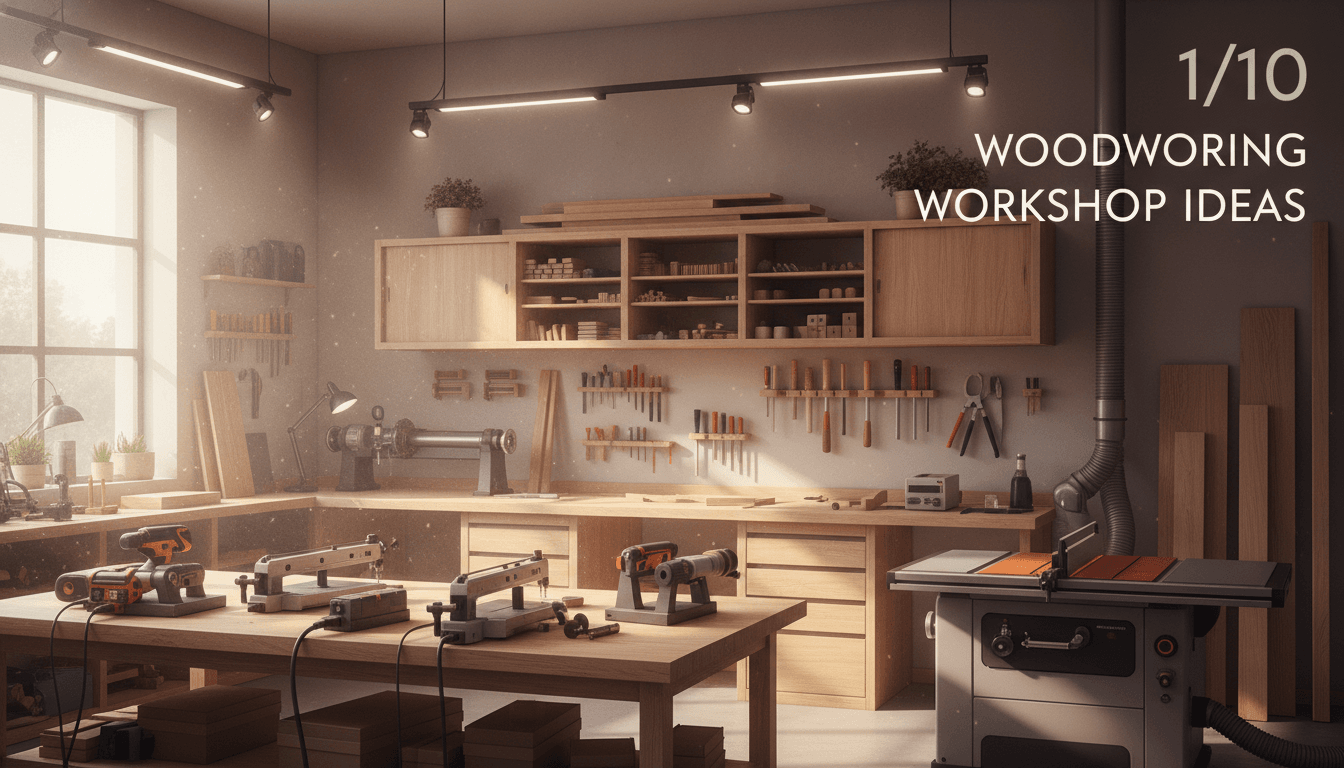
Building the perfect woodworking space is a transformative journey that elevates your craft from a simple hobby to a master-level pursuit. Whether you are an amateur weekend warrior looking to build simple birdhouses or a seasoned professional crafting intricate heirloom furniture, the environment in which you work dictates your efficiency, safety, and ultimate creative output. A well-designed shop minimizes physical strain, streamlines your material processing, and inspires you to push the boundaries of your skills. The history and evolution of woodworking reveal that master craftsmen have always prioritized an organized, intentional workspace. Today, modern technology, innovative storage solutions, and creative architectural adaptations mean that you do not need a massive industrial warehouse to build a functional shop. From sprawling two-car garages to compact apartment closets, there is a workshop layout perfectly suited to your available square footage and financial constraints. In this comprehensive guide, we will explore ten distinct woodworking workshop ideas, diving deep into the nuances of spatial planning, tool selection, and organizational methodology to help you build the ultimate creative sanctuary.
Key Takeaways for Your Wood Shop Design
- Assess Your Space and Goals: The foundation of any great shop is understanding exactly what you want to build and matching those goals to your available footprint.
- Prioritize Workflow Over Square Footage: A smaller, intelligently organized shop will always outperform a massive, cluttered workspace.
- Never Compromise on Safety: Adequate lighting, proper electrical upgrades, and rigorous dust collection are non-negotiable elements of shop design.
- Embrace Mobile Machinery: Utilizing heavy-duty casters on your primary tools allows you to dynamically reconfigure your shop for different project phases.
- Maximize Vertical Storage: Utilizing wall space for hand tools, clamps, and lumber storage keeps your precious floor space clear for active milling and assembly.
1. The Ultimate Garage Conversion Workshop
Transforming a standard garage into a fully functional woodworking shop is arguably the most popular and accessible route for home-based artisans. A typical single or double-car garage offers an incredible foundational template because it comes equipped with built-in advantages such as a sturdy concrete slab floor capable of supporting thousands of pounds of heavy cast-iron machinery. High ceilings provide ample clearance for maneuvering long boards and flipping large cabinets, while expansive roll-up doors make receiving raw lumber shipments and dispatching finished furniture pieces an absolute breeze. When you decide to claim the garage for your craft, you are stepping into a space that beautifully bridges the gap between the indoors and the outdoors. However, to transform this utilitarian structure into a true four-season workspace, you will likely need to significantly upgrade the insulation in the walls and garage door. Installing a dedicated mini-split heating and cooling system is highly recommended to manage indoor humidity, which is critical for preventing your expensive hardwoods from warping, bowing, or twisting before you even make your first cut.
Essential Tools and Machinery Layout
Optimizing the workflow in a garage setup dictates that your primary stationary tools, particularly the cabinet table saw, must be positioned at the absolute center of the room to allow for maximum infeed and outfeed clearance. Around this central hub, you can strategically create dedicated zones for milling, joining, sanding, and finishing. Placing your jointer, thickness planer, and band saw on heavy-duty mobile bases allows you to effortlessly tuck them against the perimeter walls when not in active use, instantly reclaiming valuable square footage. Along the walls, sturdy heavy-duty workbenches equipped with robust face vises provide the perfect station for detailed hand-tool work. Furthermore, installing wall-mounted French cleat systems keeps your most frequently used bar clamps, measuring tapes, chisels, and hand saws proudly displayed and within easy arm’s reach.
Storage, Organization, and Safety Protocols
Because a garage often needs to dual-purpose as household storage, aggressively utilizing vertical wall space through modular shelving and overhead ceiling racks is a non-negotiable strategy. Building custom lumber racks high on the walls keeps your precious exotic hardwoods perfectly flat and safely elevated off the potentially damp concrete floor. Safety should be a paramount concern in this enclosed environment, meaning you must invest in proper respiratory protection systems. Integrating an ambient air filtration unit hung from the ceiling, combined with a robust primary dust collector connected to your major machines via PVC or spiral galvanized ducting, ensures that you are consistently breathing clean air. Upgrading the electrical sub-panel to support dedicated 220V circuits is also essential for running powerful 3-horsepower machinery without constantly tripping household breakers.
2. The Basement Woodworking Haven
Setting up a woodworking shop in your basement provides the ultimate climate-controlled environment, shielding your delicate materials and sensitive machinery from extreme outdoor temperature fluctuations. Unlike uninsulated garages or drafting sheds, basements naturally maintain a much more consistent baseline temperature year-round, which is incredibly beneficial for complex glue-ups and delicate finishing processes that require stable conditions to cure properly. However, the subterranean nature of a basement shop introduces a unique set of challenges, primarily regarding moisture management, ceiling height restrictions, and difficult accessibility. Before moving a single heavy tool down the stairs, you must absolutely ensure that your basement is completely watertight, potentially employing commercial-grade dehumidifiers and sealing the concrete block walls with waterproof masonry paint to prevent devastating rust from forming on your expensive cast-iron tool beds. Creating this subterranean haven allows you to step away from the hustle of the main household and immerse yourself completely in your craft without ever having to step foot outside.
Navigating Noise and Accessibility Limitations
Because a basement shares essential structural floor joists with the main living spaces above, installing acoustic insulation and sound-dampening ceiling panels is crucial for maintaining peace and harmony within your household. Running a powerful high-speed router or a screaming thickness planer can generate deafening noise vibrations that easily travel upward through the floorboards, so taking the time to decouple the ceiling drywall from the joists using specialized resilient channels can make a world of difference. Furthermore, moving massive 4×8 sheets of heavy MDF or carrying pre-assembled hardwood furniture up and down a narrow, winding basement staircase requires meticulous strategic planning. Many ingenious basement woodworkers opt for sliding tracking systems or build specialized wooden ramps directly over their stairs to facilitate material transport. When planning your complex basement layout, it is highly recommended to consult professional custom woodworking services to help intelligently design a space that maximizes your workflow while accommodating these stubborn architectural choke points.
Air Quality and Ventilation Strategies
Perhaps the absolute most critical aspect of establishing a basement workshop is installing a rigorous, multi-stage dust collection and air filtration system, as natural fresh-air ventilation is usually virtually nonexistent. Without the luxury of opening wide garage doors to let the prevailing winds breeze out the fine particulate matter, you must rely entirely on modern technology to keep your lungs safe and your home meticulously clean. Connecting every single power tool to a central cyclonic dust collector equipped with an ultra-fine HEPA filter is strictly mandatory. Additionally, ceiling-mounted ambient air cleaners should be set to run continuously while you work and left on for several hours after you finish your session. To truly understand the severe, long-term health impacts of poor workshop ventilation, reviewing the EPA standards for indoor air quality is deeply essential for any responsible maker. Carefully creating a slight negative air pressure zone in the basement can also effectively prevent insidious fine wood dust from seeping up into the main floor of your house through the HVAC ductwork.
3. The Dedicated Backyard Shed Shop
Designing and constructing a purpose-built backyard woodworking shed offers the distinct advantage of a fully isolated, customized workspace completely detached from your primary residence. This separation is a massive blessing for noise control, dust containment, and creating a definitive psychological boundary between your home life and your creative work life. When you build a shed shop from the ground up, you have the ultimate architectural freedom to dictate exactly where the windows go to capture the best natural light, how tall the ceilings should be for flipping long boards, and where every single electrical receptacle should be placed. While pre-fabricated sheds can certainly be retrofitted for woodworking, framing your own custom building allows for thicker walls that accommodate superior insulation and soundproofing materials. A well-built backyard shed serves as a standalone sanctuary where the sawdust can fly freely without any fear of tracking it onto the living room carpet.
Foundation, Framing, and Electrical Trenching
Because woodworking machinery is exceptionally heavy and requires absolute stability to produce accurate cuts, pouring a reinforced, level concrete slab foundation is vastly superior to a standard raised wooden floor system. A solid concrete base drastically reduces machine vibration, which translates directly to cleaner cuts and smoother joinery on your workpieces. Bringing adequate power to an outbuilding is usually the most significant hurdle in this workshop idea, requiring a professionally dug trench to run heavy-gauge conduit from your home’s main electrical panel. You will need to install a robust dedicated sub-panel inside the shed, typically ranging from 60 to 100 amps, to comfortably run lighting, climate control, a primary dust collector, and major 220V machinery simultaneously without dangerous power drops.
4. The Mobile and Modular Workbench Centric Space
For woodworkers who must constantly share their space with parked vehicles or family storage, designing a shop entirely around heavy-duty mobility is the ultimate secret to maximizing utility in a constrained footprint. The core philosophy of a modular shop is that absolutely nothing touches the floor permanently; every single workbench, machine stand, and lumber cart must be mounted on premium, double-locking polyurethane casters. This dynamic approach allows you to seamlessly transform a standard parking garage into a sprawling, highly capable production floor in less than ten minutes, and pack it all away just as quickly. The centerpiece of this setup is typically a massive, custom-built mobile workbench that doubles as an outfeed table for a job site or contractor table saw mounted securely within its framework. For inspiration on designing these multifaceted workstations, you can explore our comprehensive woodworking guides that detail step-by-step plans for modular shop furniture.
Fold-Away Efficiency and Clever Nesting
To further maximize floor space, integrating flip-top tool carts allows you to mount two different benchtop machines, such as a planer and an oscillating spindle sander, on a single rotating axis. When you need the planer, it sits facing up; when you finish, you simply pull a locking pin, flip the tabletop 180 degrees, and immediately access your sander. Wall-mounted drop-down assembly tables provide massive, perfectly flat surfaces for complicated glue-ups, and then fold completely flat against the wall when the space is needed for the family minivan. By rigidly standardizing the working heights of all your mobile carts to perfectly match your central table saw, every single surface in the room can instantly become infeed or outfeed support for breaking down massive sheets of unwieldy plywood.
5. The Small-Space Apartment Closet Micro-Shop
Living in a high-rise apartment or a tiny home does not mean you have to abandon your woodworking dreams; it simply requires a shift toward micro-scale projects and ultra-compact tool selections. A micro-shop can be successfully established inside a walk-in closet, a small apartment balcony, or a dedicated corner of a living room by utilizing a sturdy, compact jeweler’s bench or a miniature folding workbench. This highly constrained environment is naturally perfect for intricate, quiet disciplines such as wood carving, traditional whittling, model ship building, or crafting detailed wooden jewelry. Because space is at an absolute premium, heavy, noisy stationary power tools are completely out of the question, forcing you to rely heavily on razor-sharp traditional hand tools and highly versatile rotary tools like Dremels.
Managing Dust and Noise in Shared Living Spaces
When operating a woodworking shop directly inside your primary living area, aggressive dust control and strict noise mitigation are absolutely paramount to avoid ruining your home and angering your neighbors. Traditional sweeping is totally inadequate; you must utilize a high-quality HEPA shop vacuum connected directly to a miniature cyclone separator to capture fine dust precisely at the source before it settles into your furniture and carpets. Hand planes and sharp chisels are heavily favored in this environment because they produce heavy, manageable wood shavings that drop harmlessly to the floor, rather than creating the toxic, airborne fine dust associated with high-speed routers and random orbit sanders. Working on a thick rubber mat can also dramatically reduce the impact noise and vibration of mallet strikes from traveling through the floorboards to the apartment below.
6. The Eco-Friendly and Sustainable Green Workshop
The eco-friendly woodworking shop is meticulously designed around the core principles of environmental sustainability, drastically minimizing waste, and exclusively utilizing non-toxic, natural finishing products. As modern woodworkers become increasingly conscious of deforestation and chemical pollution, many are purposefully building spaces that reflect a deep respect for the natural world that provides their materials. This workshop relies heavily on sourcing reclaimed barn wood, urban salvaged logs, and certified sustainable lumber to craft beautiful pieces without contributing to clear-cutting. By making it a rigid standard to only purchase wood certified by the Forest Stewardship Council (FSC), you ensure that your beautiful craft is not quietly supporting illegal or destructive global logging practices. An eco-friendly shop also aggressively prioritizes natural lighting through large, strategically placed skylights and relies entirely on high-efficiency LED fixtures to dramatically reduce the workshop’s overall electrical carbon footprint.
Non-Toxic Finishes and Energy Efficiency
Traditional wood finishing often involves highly volatile organic compounds (VOCs) that are terribly harmful to both the ozone layer and the craftsman’s respiratory system, making the switch to natural oils and water-based finishes a cornerstone of the green shop. Utilizing pure raw linseed oil, natural beeswax, and tung oil provides incredibly gorgeous, rich finishes that are completely food-safe and devoid of toxic chemical off-gassing. For power consumption, some dedicated eco-shops even go so far as to install dedicated solar panels on the workshop roof to directly offset the massive energy draw of heavy machinery like table saws and dust collectors. Scrap wood and offcuts are never carelessly thrown into the municipal trash; instead, they are carefully sorted and repurposed into smaller cutting boards, donated to local schools, or cleanly burned for winter heat in a highly efficient, EPA-certified wood stove.
7. The Hybrid Wood and Metal Fabrication Shop
Fusing the distinct disciplines of fine woodworking and metal fabrication into a single, cohesive hybrid shop allows modern makers to build incredibly stunning industrial-style furniture that features both organic grain and rigid steel. Incorporating steel table legs, custom brass inlay hardware, and welded iron frames requires a workspace that can seamlessly and safely handle both the flammable sawdust of the wood shop and the blazing hot sparks of the metal shop. Designing this hybrid layout requires strict, thoughtful zoning; the shop must be physically divided into a clean, dust-sensitive woodworking zone and a rugged, fire-resistant metalworking zone. A heavy-duty steel welding table and a dedicated metal-cutting bandsaw sit on one side of the room, while the delicate woodworking machines sit on the other, ensuring that greasy metal shavings never accidentally embed themselves into a pristine piece of soft mahogany.
Crucial Fire Safety and Zoned Workflows
The absolute greatest hazard in a hybrid shop is the catastrophic combination of smoldering hot metal sparks flying directly into a highly combustible pile of dry wood dust, making extreme fire safety protocols your number one priority. To mitigate this terrifying risk, welding curtains must be installed to contain sparks, and the metalworking zone should feature a bare concrete floor completely devoid of any sawdust accumulation. You should constantly review strict OSHA guidelines on woodworking safety and hot work procedures to ensure your shop remains disaster-free. Having multiple, high-capacity ABC fire extinguishers strategically placed at every single exit, along with strict adherence to our specialized workshop safety protocols, will ensure that you can safely marry these two incredibly beautiful but vastly different crafting mediums under one roof.
8. The Automated CNC and Laser Engraving Workshop
The rapid rise of accessible digital fabrication has birthed the ultra-modern CNC and laser workshop, a space where traditional handcrafting meets high-precision computer-controlled automation. This highly advanced workshop layout centers entirely around a massive flatbed CNC router and a sophisticated CO2 laser engraver, machines capable of executing incredibly complex joinery, intricate 3D carvings, and flawless repetitive batch production with mind-blowing micron-level accuracy. Because these advanced machines rely on sensitive computer components, delicate stepper motors, and precisely calibrated optical lenses, the physical environment must be kept significantly cleaner and more climate-controlled than a traditional dusty wood shop. You will need a dedicated, dust-free workstation specifically for your CAD/CAM design computers, physically shielded from the main cutting floor to prevent fine particulate matter from instantly destroying delicate cooling fans and computer motherboards.
Climate Control, Cleanliness, and High-Tech Dust Management
Properly extracting the enormous volume of dust generated by an aggressive CNC router requires a highly specialized, continuous-duty vacuum system specifically designed for automated machinery. Standard shop vacs will quickly overheat and burn out under the relentless strain of a multi-hour 3D carving toolpath, necessitating the installation of commercial-grade industrial dust collection systems to handle the massive, constant influx of chips. Laser cutters present their own unique, critical challenges, primarily the generation of highly toxic, foul-smelling smoke from burning wood glues and resins, which must be aggressively exhausted outside through specialized high-velocity inline fans. Creating a completely separate, heavily air-conditioned clean room for finishing and sensitive electronics ensures that your highly expensive digital investments run flawlessly for years to come.
9. The Traditional Hand-Tool Only Maker Space
Stepping into a traditional, hand-tool only woodworking shop is like stepping back in time; it is a profoundly quiet, deeply meditative space completely devoid of the screaming noise and dangerous high-speed blades of modern machinery. This purist approach to the craft relies entirely on muscle power, absolute razor sharpness, and immense physical patience to slowly transform rough-sawn lumber into perfectly dimensioned, heirloom-quality furniture. Because there are literally no power cords to trip over, no massive dust collectors to route, and zero need for 220V electrical circuits, this workshop can be beautifully set up in almost any spare room, attic, or small shed. The undeniable heart and soul of the hand-tool shop is the classic, massively heavy woodworking bench—such as a traditional Roubo or Nicholson design—equipped with robust tail vises, heavy holdfasts, and thick dog holes to rigidly secure the work against the immense physical force of aggressive hand planing.
The Meditative Process and Storage Elegance
Without the constant, stressful hum of heavy machinery, the hand-tool woodworker can truly listen to the subtle sound of the hand plane slicing through the grain, creating an incredibly peaceful, almost spiritual crafting environment. The storage solutions in a hand-tool shop are often works of art themselves; beautifully crafted wooden wall tills elegantly display an armada of specialized hand planes, delicate layout gauges, and perfectly sharpened chisels. Because this method generates beautiful, heavy wood shavings rather than toxic airborne fine dust, the physical cleanup is remarkably easy, requiring nothing more than a simple bristle broom and a dustpan. This minimalist, highly deliberate approach to woodworking intensely connects the maker directly to the raw material, fostering a deep, tactile understanding of wood grain direction and cellular structure that power tools often completely obscure.
10. The Luxury Dream Professional Woodworking Studio
The luxury dream workshop is the absolute pinnacle of woodworking spaces, built with a completely unlimited budget and designed from the ground up to offer the ultimate, uncompromising creative experience. This is the sprawling, magnificent studio you build when woodworking is no longer just a hobby, but your profound life’s calling, featuring thousands of square feet of perfectly leveled hardwood flooring designed to significantly reduce agonizing back and leg fatigue during long, demanding shifts. Massive, sweeping cathedral windows flood the massive space with gorgeous, color-correct natural northern daylight, while state-of-the-art radiant floor heating ensures the shop is always luxuriously warm, even during the most brutal, freezing winter mornings. If you are incredibly fortunate enough to be planning a massive space of this caliber, we highly encourage you to contact our workshop design team to consult on professional-grade layouts and advanced ergonomic workflow optimization.
Dedicated Rooms and Ultimate Workflow Control
A true luxury studio eliminates the chaotic compromises of a one-room shop by physically separating the various stages of furniture building into perfectly distinct, environmentally controlled rooms. The noisy, incredibly dusty rough-milling process happens in a heavily soundproofed machine room equipped with massive, 3-phase industrial sliding table saws and 24-inch helical head planers. Once the intricate joinery is painstakingly completed in the quiet, naturally lit bench room, the piece is finally rolled into a completely sterile, pressurized finishing room equipped with explosion-proof lighting and commercial automotive-style spray booths for applying flawless, glass-like lacquer coats. Every single power tool is hardwired into the floor to completely eliminate highly dangerous tripping hazards, and the entire facility is monitored by advanced, smart-home environmental sensors that automatically adjust humidity and trigger dust collection blast gates the exact moment a machine powers on.
Conclusion: Bringing Your Woodworking Workshop Ideas to Life
Designing and building your dream workshop is a deeply personal, highly rewarding endeavor that requires thoughtfully balancing your available square footage, your financial budget, and your specific, long-term woodworking ambitions. Whether you are carving delicate spoons on a tiny apartment balcony or mass-producing high-end custom cabinetry in a massive hybrid mega-shop, the fundamental principles of logical layout, rigorous safety, and creative flow remain exactly the same. Take the time to map out your floor plans with masking tape, aggressively invest in the best dust collection you can possibly afford, and never, ever be afraid to reconfigure your layout as your skills inevitably grow and evolve over time. Ultimately, the very best woodworking workshop is simply the one that actively inspires you to pick up your tools, hone your beautiful craft, and confidently build something truly extraordinary today.