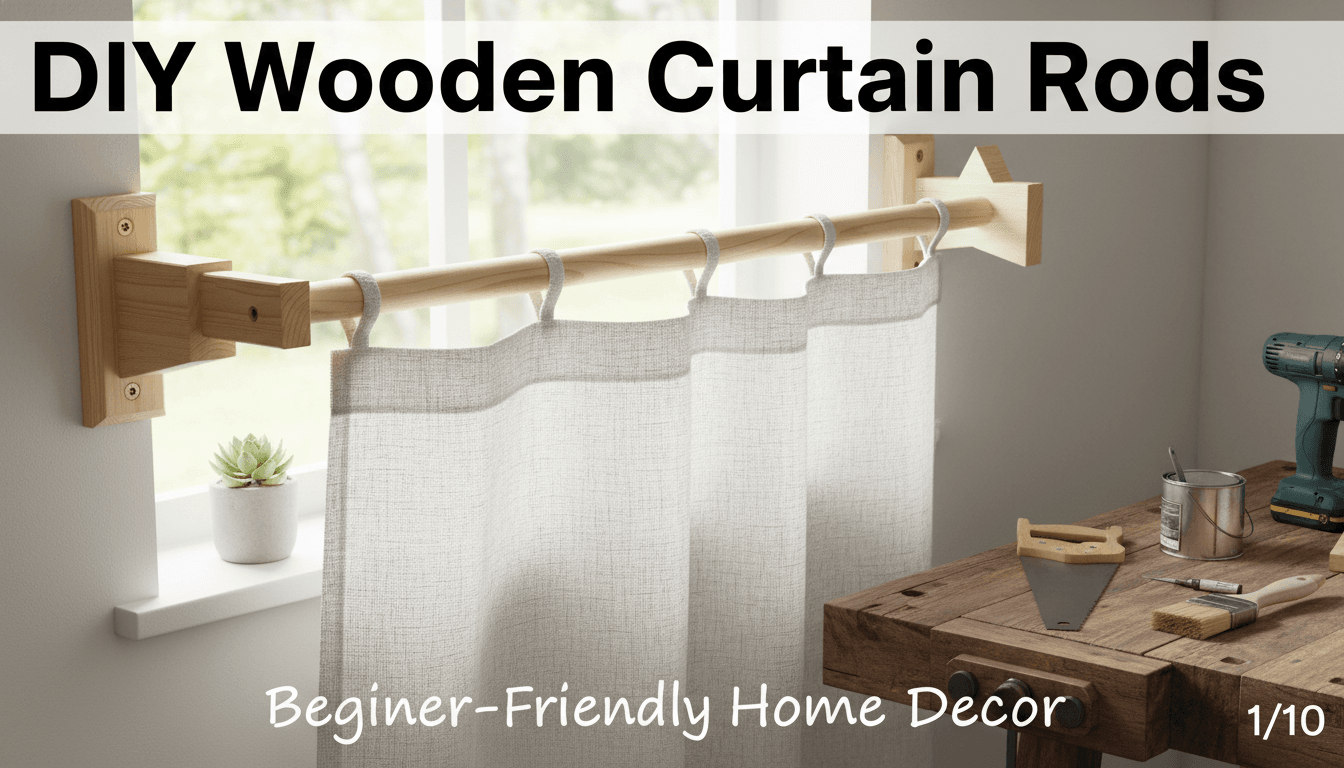
DIY Wooden Curtain Rod and Bracket Ideas for Home Decor Beginners
When embarking on your interior design journey, exploring DIY wooden curtain rod and bracket ideas is a fantastic way to infuse custom charm into your living space. Window treatments are often the unsung heroes of a room, providing not only privacy and light control but also acting as a significant aesthetic anchor. For beginners in home decor, crafting your own wooden hardware might seem intimidating, but it is actually one of the most rewarding and straightforward projects you can undertake. By making your own rods and brackets, you bypass the cookie-cutter options available at big-box stores and create pieces that perfectly match your specific style, window dimensions, and budget. Whether you are aiming for a rustic farmhouse vibe, a sleek mid-century modern aesthetic, or a bohemian retreat, custom woodworking allows you to dictate the exact finish, thickness, and design of your window treatments. Furthermore, this hands-on approach provides an excellent entry point into the broader world of DIY home improvement.
Key Takeaways for Your DIY Curtain Hardware Project
- Creating your own curtain hardware saves money while delivering a high-end, custom look.
- Wood offers unparalleled versatility, allowing you to stain, paint, or carve it to match any decor style.
- Beginners can achieve professional results using basic hand tools, pre-cut dowels, and simple bracket designs.
- Proper measuring and secure installation are critical to ensuring your wooden rods can support heavy drapery.
- Using sustainably sourced wood not only enhances the beauty of your home but also supports environmental conservation.
Introduction to DIY Wooden Window Treatments
The concept of crafting your own window treatments is rooted in a desire for authenticity and personalized design within the home. In recent years, the trend has shifted away from mass-produced, flimsy metal rods toward robust, organic materials that bring warmth and texture into living spaces. When you dive into DIY wooden curtain rod and bracket ideas, you are participating in a rich tradition of hand-crafted home goods that prioritize both form and function. Learning the fundamentals of woodworking through a simple project like this builds foundational skills that you can later apply to more complex furniture building or home renovations. For beginners, the stakes are relatively low, as the materials are inexpensive and the cuts are generally straightforward. However, the visual impact of installing a chunky, beautifully stained wooden rod across a large living room window is absolutely immense. This transformation proves that you do not need decades of carpentry experience to significantly elevate your home decor.
Why Choose Wood for Your Curtain Rods and Brackets?
Aesthetic Appeal and Natural Warmth
There is an undeniable warmth and organic beauty that natural wood brings to an interior space, something that cold metal or cheap plastic simply cannot replicate. Wood has unique grain patterns, varying textures, and a natural ability to absorb stains and oils in a way that highlights its inherent character. When you incorporate wooden elements into your window treatments, you are bridging the gap between the indoors and outdoors, creating a calming, grounded atmosphere. According to many interior design professionals, integrating natural materials is one of the most effective expert window treatment ideas to instantly make a room feel more inviting and thoughtfully curated. Depending on the species of wood you choose, you can achieve vastly different looks; for example, a pale ash or maple offers a breezy, Scandinavian feel, while a dark, rich walnut or mahogany exudes traditional elegance and sophistication. Furthermore, wood gracefully ages over time, developing a unique patina that adds to the historical charm and lived-in feel of your home.
Cost-Effectiveness and Ultimate Customization
One of the most compelling reasons to build your own curtain rods and brackets is the sheer cost-effectiveness compared to purchasing high-end retail hardware. Custom window hardware, especially for extra-wide windows or non-standard architectural features, can cost hundreds or even thousands of dollars. By sourcing your own lumber, dowels, and basic mounting supplies, you can often complete an entire room’s window treatments for a fraction of that price. Beyond the financial savings, the ultimate customization allows you to dictate the exact length, diameter, and bracket projection to perfectly accommodate your specific curtains, whether they are sheer linens or heavy velvet blackouts. You are never constrained by standard factory sizes, which often leave homeowners struggling with telescoping rods that snag fabric and look visually disruptive. If your window requires an uninterrupted 120-inch span, a custom-cut piece of premium wooden dowel can provide that seamless, luxurious look without the center-sag common in cheap alternatives.
Essential Tools and Materials for Beginners
Hardware and Basic Tools Required
Before you begin measuring and cutting, assembling the right tools and hardware is crucial to ensure a smooth, frustration-free DIY experience. Fortunately, crafting DIY wooden curtain rods does not require a fully equipped professional woodshop. You will need a reliable measuring tape, a hand saw or miter saw for clean cuts, a power drill with various bit sizes, a level to ensure straight installation, and a stud finder to guarantee your heavy curtains stay securely attached to the wall. Familiarizing yourself with essential power tool safety is a vital first step for any beginner to prevent accidents and ensure precise, accurate workmanship. In addition to the tools, you will need mounting hardware such as wood screws, drywall anchors (if studs are inaccessible), and sandpaper in varying grits (ranging from 80-grit for rough shaping to 220-grit for a silky-smooth finish). Gathering these items beforehand allows you to maintain momentum once the creative process begins.
Choosing the Right Wood Species
Selecting the appropriate wood species is a critical decision that influences both the durability and the final aesthetic of your curtain rods. For beginners, softwood dowels made from pine or poplar are excellent choices because they are inexpensive, readily available at most hardware stores, and very easy to cut and sand. However, if you are hanging heavy drapes or spanning a wide window, you might want to upgrade to hardwoods like oak, maple, or cherry, which offer superior tensile strength and resist bowing over long distances. When purchasing your materials, making an effort to seek out responsibly sourced timber ensures that your home decor project aligns with global environmental sustainability efforts. Consider the finish you intend to apply; pine takes paint beautifully but can sometimes be blotchy when stained dark, whereas oak features a prominent grain that looks stunning when enhanced with a rich, dark walnut stain. Taking the time to test your chosen finish on a scrap piece of your selected wood is a pro-tip that saves beginners from unexpected disappointments.
Simple and Elegant DIY Wooden Curtain Rod Ideas
The Classic Wooden Dowel Rod
The classic wooden dowel rod is the quintessential beginner project, offering maximum visual impact with minimal cutting and assembly required. To achieve this look, you simply purchase a thick wooden dowel—usually 1.25 to 2 inches in diameter, depending on the scale of your room—and cut it to your desired length. A standard rule of thumb is to extend the rod 4 to 8 inches beyond the window frame on each side, which makes the window appear larger and allows maximum light to enter when the curtains are open. To finish the dowel, you can apply a natural beeswax polish for a subtle sheen, or use a high-gloss polyurethane if you want a more modern, reflective surface. You can leave the ends blunt for a minimalist, modern aesthetic, or glue on wooden finials (often sold in the same aisle as the dowels) to give the rod a traditional, finished appearance. This approach is incredibly versatile, fitting seamlessly into almost any interior design scheme with just a simple change of paint or stain.
Rustic Branch Curtain Rods
For those who love cabin core, farmhouse, or bohemian aesthetics, foraging a sturdy branch to use as a curtain rod is a free and profoundly unique DIY option. Finding the right branch requires a bit of hunting; you want a piece of hardwood that is relatively straight, completely dry, and thick enough to support the weight of your fabric without snapping. Once you find the perfect specimen, you must strip the loose bark, sand down any sharp nodules that might snag your curtains, and treat the wood to eliminate any lingering pests. Baking the branch in an oven at a low temperature or treating it with a specialized wood sealer ensures that your rustic rod is safe and durable for long-term indoor use. The organic, undulating shape of a natural branch adds incredible sculptural interest to a room, turning an ordinary window treatment into a true conversation piece. Paired with simple canvas or linen curtains, a branch rod brings the tranquil, restorative beauty of nature directly into your living room or bedroom.
Square Wooden Beams for a Modern Look
If your home leans toward modern, industrial, or minimalist design, substituting the traditional round rod for a square wooden beam offers a strikingly contemporary geometric contrast. Using a 1×1 or 2×2 inch piece of premium lumber, you can create a curtain rod with sharp, clean lines that commands attention. Because curtain rings are typically round, hanging curtains on a square beam usually involves using fabric ties, leather loops, or extra-large metal rings that can easily slide over the corners of the wood. To emphasize the modern aesthetic, consider staining the square beam in an ultra-dark ebony or matte black, which mimics the look of expensive industrial steel while retaining the warmth of wood. You can also chamfer (slightly bevel) the edges with a sander to prevent splintering and ensure the fabric or rings glide smoothly when you open and close the drapes. This architectural approach to window hardware proves that DIY projects can look incredibly high-end and bespoke.
Creative DIY Wooden Bracket Ideas
Traditional Wooden Corbel Brackets
Using wooden corbels as curtain rod brackets is a brilliant way to inject vintage, architectural elegance into your window treatments. Corbels, traditionally used to support roof eaves or interior shelves, can easily be adapted to hold a curtain rod by simply drilling a hole through the center or carving a U-shaped notch into the top. You can purchase pre-made decorative corbels online or at antique stores, or cut your own from a solid block of wood using a jigsaw or scroll saw. When securely anchored to the wall studs, heavy-duty corbels provide unmatched support, making them the ideal choice for heavy winter drapes that also function as energy-efficient window coverings. The intricate carvings and sweeping curves of a traditional corbel contrast beautifully with the simple straight line of a wooden dowel rod. To tie the look together, you can paint the corbels to match your window trim for a built-in look, or stain them to match the rod perfectly.
Minimalist Leather and Wood Loop Brackets
Combining natural wood with leather straps creates a highly textured, minimalist bracket alternative that has become immensely popular in contemporary interior design. Instead of using rigid wooden brackets, you create loops out of heavy-duty leather strapping, anchor the ends of the leather directly into the wall with a stylish brass or black screw, and simply slide your wooden dowel through the loops. This method is exceptionally forgiving for beginners because it requires no complex woodworking joints or precise angled cuts. The juxtaposition of supple, rich leather against a rigid, smoothly sanded wooden dowel introduces a sophisticated tactile element that elevates the entire room’s decor. You can source leather scraps from local craft stores, or even repurpose old belts for an upcycled, eco-friendly approach. Just ensure the leather is thick enough to resist stretching over time, and position the wall anchors securely into studs to bear the weight of the rod and curtains safely.
Repurposed Wood Block Brackets
For a chunky, modern, and delightfully simple bracket, utilizing solid geometric wood blocks is an incredibly effective DIY strategy. You can create these by taking a piece of 2×4 or 4×4 lumber, cutting it into neat square or rectangular blocks, and using a Forstner bit or hole saw to drill a perfectly round channel through the center for the dowel to pass through. These blocks are then screwed directly into the wall from the front (countersinking the screws and covering them with wood filler) or attached using hidden keyhole fasteners on the back for a floating effect. This block-style bracket completely encases the rod, ensuring it can never accidentally be pulled down by children or pets tugging on the curtains. It is a highly robust, architecturally interesting choice that aligns perfectly with mid-century modern or brutalist decor styles. Furthermore, you can leave the blocks in their natural raw state, or paint them in a bold accent color to make the hardware a focal point of the room.
Step-by-Step Guide to Crafting Your First Wooden Curtain Rod
Measuring and Cutting with Precision
The foundation of any successful DIY project lies in the planning phase, meaning precise measuring is the most critical step of crafting your curtain hardware. Begin by measuring the width of your window, including the trim; then, decide how far you want the rod to extend past the window on either side. As a general rule, extending the rod 6 to 10 inches past the frame makes the window look wider and allows the curtains to stack completely off the glass when open, maximizing natural light. Once you have your total length, carefully mark your wooden dowel or beam and use a fine-toothed saw to make a clean, perfectly straight cut. If you are spanning a distance greater than 60 inches, it is highly recommended to plan for a center support bracket to prevent the wood from bowing under the weight of the fabric over time. Double-check all measurements before cutting, as it is always easier to trim a little extra wood off than it is to fix a rod that has been cut too short.
Sanding, Staining, and Sealing the Wood
Properly finishing the wood is what separates a cheap-looking amateur craft from a professional, bespoke piece of home decor. Start by sanding the entire rod and your wooden brackets with 120-grit sandpaper to remove any rough patches, splinters, or factory markings, then follow up with 220-grit sandpaper to achieve a glass-like smoothness. If you plan to stain the wood, apply a pre-stain wood conditioner first; this prevents the stain from absorbing unevenly and causing unsightly blotches, especially on softwoods like pine. After applying your chosen stain and allowing it to dry completely, seal the wood with at least two coats of a protective finish like wipe-on polyurethane or a hard wax oil. This topcoat is absolutely essential because it reduces friction, allowing your curtain rings to glide effortlessly across the rod without scratching the wood or snagging the fabric. Between coats of sealer, give the wood a very light sanding with 400-grit paper to knock down any raised grain, ensuring a flawlessly smooth final product.
Installing the Brackets and Hanging the Rod
The final installation phase requires patience and precision to ensure your beautiful new DIY wooden curtain rod is perfectly level and securely attached to the wall. Start by determining the height at which you want to hang your curtains; hanging them higher and closer to the ceiling draws the eye upward and makes the room feel significantly taller and more expansive. Use a stud finder to locate the wall framing, as anchoring your brackets directly into wood studs is the only foolproof way to ensure they can support the weight of heavy curtains. Using a laser level or a long spirit level, mark the drill holes for your brackets, ensuring they are perfectly horizontal so your rod does not slope and your curtains hang symmetrically. If studs are not located where you need your brackets to go, you must use high-quality, heavy-duty toggle bolts or drywall anchors rated for at least 50 pounds. Finally, install the brackets, slide your curtain rings onto the rod, mount the rod into the brackets, and secure it in place (using a small set screw if necessary) to prevent the rod from shifting when you open and close the drapes.
Advanced Tips for Maintaining and Upgrading Wooden Rods
Once your DIY wooden curtain rod and bracket system is installed, maintaining it properly will ensure it lasts for decades and continues to look impeccable. Over time, friction from metal or wooden curtain rings can begin to wear down the finish on the top of the rod, making it slightly harder to pull the curtains smoothly. To remedy this, you can periodically rub a plain white candle or a block of beeswax along the top edge of the rod; this invisible layer of wax acts as a dry lubricant, restoring the effortless glide without leaving a sticky residue. If your decor tastes change in the future, the beauty of solid wood hardware is that it can easily be taken down, sanded back to bare wood, and refinished in a completely new color or style. For instance, a light, natural oak rod can easily be transformed into a moody, dark espresso rod with just a few hours of work. Additionally, you can upgrade the look of simple dowels by swapping out the finials; changing from a simple wooden end cap to an ornate brass or crystal finial can completely alter the vibe of the room. Ultimately, creating your own window treatments is not just a one-time project, but an ongoing opportunity to express your creativity and adapt your home environment to your evolving personal style.
Conclusion: The Satisfaction of Custom DIY Decor
Taking the plunge into DIY wooden curtain rod and bracket ideas is a profoundly rewarding endeavor that empowers beginners to take control of their home’s aesthetic. What begins as a simple trip to the lumber aisle quickly transforms into a lesson in design, measurement, woodworking, and installation. You are no longer bound by the limited, uninspired selections found in retail stores, nor are you forced to pay exorbitant prices for custom hardware. By utilizing basic tools, sustainable materials, and a bit of creativity, you can craft window treatments that perfectly encapsulate your personal style, elevate your interior design, and stand the test of time. The pride you will feel every time you draw your curtains open to welcome the morning light is unmatched. Embrace the imperfections, enjoy the hands-on process of creation, and let your newly crafted wooden hardware serve as the beautiful, functional foundation for many more home decor projects in the future.