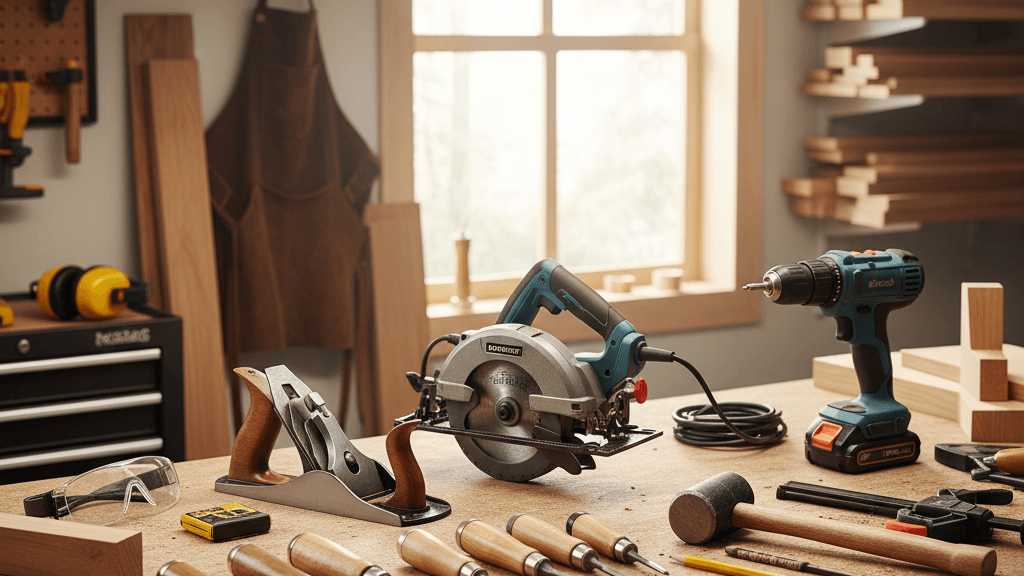
What Tools Do I Need to Start Woodworking at Home?
Starting a woodworking journey is an incredibly rewarding endeavor that allows you to transform raw timber into functional art. However, many beginners feel overwhelmed by the sheer variety of equipment available on the market today. The key to successfully starting a home woodworking shop is to focus on a core set of versatile tools that cover the essential tasks of measuring, cutting, joining, and finishing. You do not need a massive budget or a commercial-grade warehouse to begin; a simple garage or basement corner can suffice for your first projects. By investing in quality over quantity, you ensure that your tools remain reliable for years to come. In this guide, we will break down the absolute essentials you need to build your first project safely and accurately.
Once your tool kit is ready, the next step is learning to read woodworking plans and pick your first project — our complete beginner’s guide covers cut lists, diagrams and planning.
Key Takeaways for Setting Up Your Home Shop
- Precision starts with measurement: Never skimp on your marking and measuring tools.
- Safety is non-negotiable: Always wear eye and hearing protection from day one.
- Versatility is king: Choose power tools like the circular saw that can perform multiple tasks.
- Hand tools are fundamental: Learning to use a chisel or hand plane builds a deeper connection with the wood.
- Start small: Build your tool collection as your projects demand them.
The Foundation of Safety: Personal Protective Equipment (PPE)
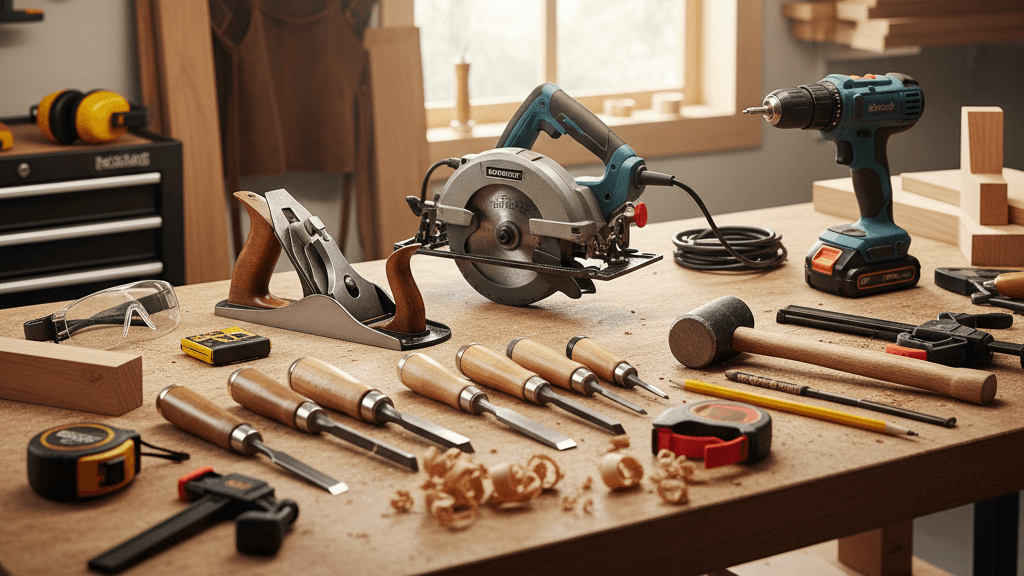
Before you even touch a piece of lumber, you must prioritize your physical well-being. Woodworking involves flying debris, high-speed blades, and fine dust that can damage your lungs. Developing a safety-first mindset is the most critical skill any woodworker can possess. For detailed safety standards, you can refer to OSHA safety guidelines. You will need a pair of impact-resistant safety glasses that fit comfortably over your eyes. High-quality safety glasses prevent stray wood chips from causing permanent ocular damage. Additionally, hearing protection such as earplugs or earmuffs is vital when operating loud machinery like planers or miter saws. According to the CDC NIOSH research, prolonged exposure to power tool noise can lead to irreversible hearing loss. Finally, a dust mask or respirator is essential to prevent the inhalation of fine saw dust, which can be toxic depending on the wood species. A proper respirator with replaceable filters is significantly more effective than a simple cloth mask.
Measuring and Marking: The Pillars of Precision
The old adage “measure twice, cut once” is the golden rule of the workshop. Without accurate measurements, your joints will not fit, and your furniture will be unstable. Investing in high-quality measuring tools ensures that every piece of your project aligns perfectly during assembly. Start with a 16-foot or 25-foot tape measure with a stiff blade that doesn’t buckle easily. A reliable tape measure is the most used tool in any woodworker’s apron. For more precise work, a 12-inch combination square is indispensable. It allows you to check for 90-degree squareness, mark 45-degree miters, and measure depths accurately. The combination square is the primary tool used to verify that your shop setup is calibrated correctly. You should also consider a marking knife instead of a pencil for your most critical cuts. A marking knife creates a physical scribe line that guides your saw blade with surgical precision. For those looking for more in-depth advice on project planning, check out our beginner woodworking guides.
Essential Hand Tools for Every Beginner
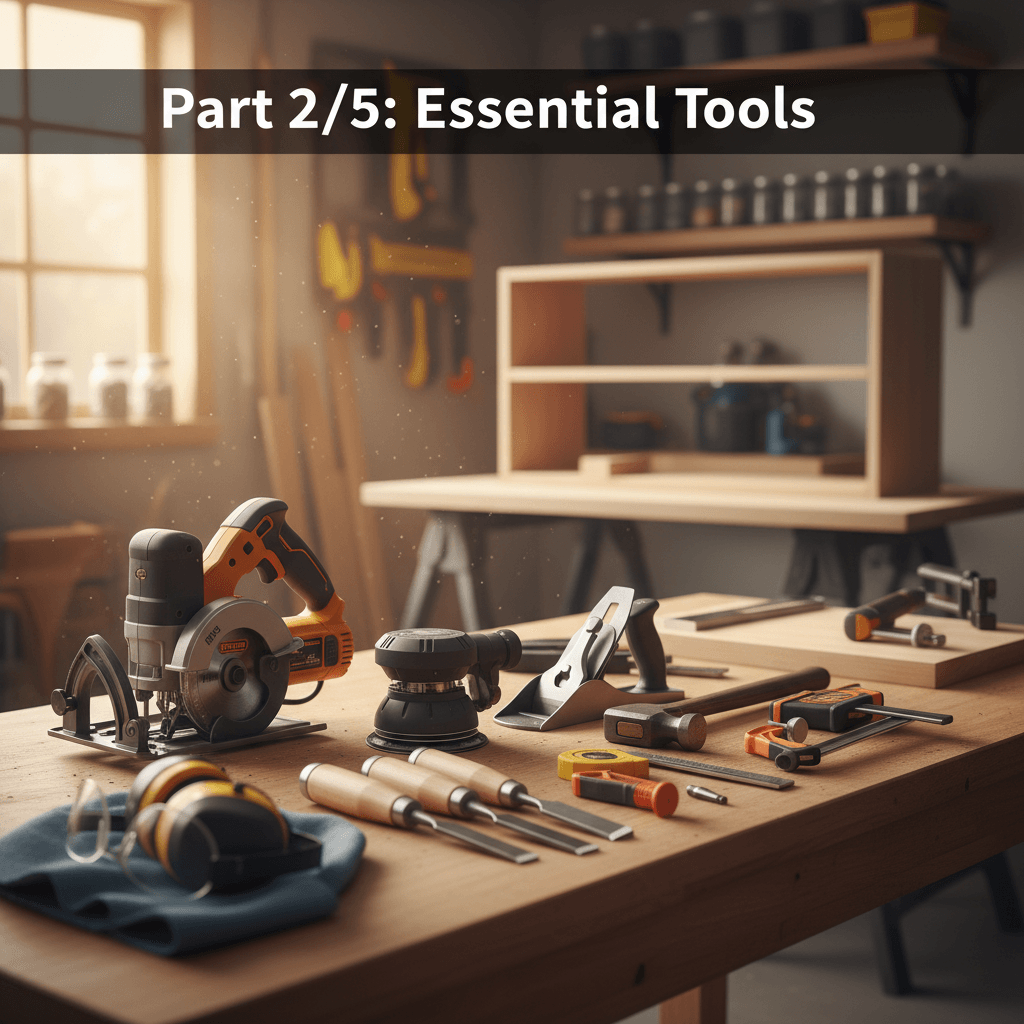
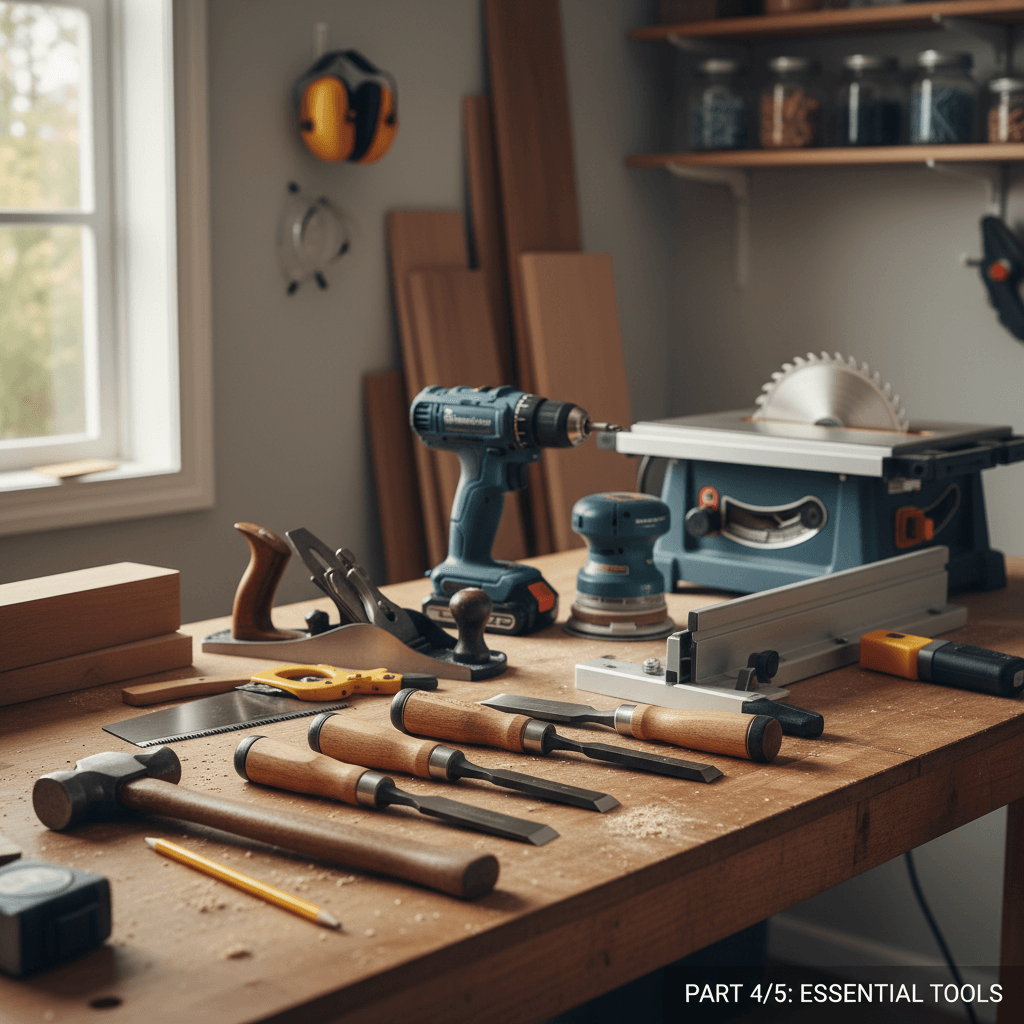
While power tools offer speed, hand tools offer a level of control and finesse that machines cannot replicate. Learning the mechanics of hand tools will make you a more intuitive and skilled woodworker. A set of sharp chisels (specifically 1/4″, 1/2″, and 3/4″ widths) is necessary for cleaning out joints and carving recesses. High-carbon steel chisels hold a sharp edge longer and allow for cleaner paring of wood fibers. You will also need a quality mallet—never use a metal hammer on your chisel handles. A wooden or rubber mallet provides the necessary force without damaging the impact end of your hand tools. Another vital tool is the block plane, which is perfect for squaring up end grain and breaking sharp edges. A well-tuned block plane can produce a surface so smooth it requires no further sanding. To learn more about the history and evolution of these tools, visit Wikipedia’s Woodworking overview.
Power Tools: Efficiency and Capability
To make significant progress on larger projects like tables or bookshelves, power tools are a necessity. Power tools reduce the physical labor involved in woodworking and allow for rapid material removal. The first power tool most people should buy is a cordless drill and driver set. A versatile drill/driver is essential for everything from boring holes to driving long structural screws. Next on the list should be a circular saw. While many beginners think they need a table saw immediately, a circular saw paired with a straight-edge guide can perform many of the same tasks for a fraction of the price. The circular saw is the most portable and adaptable cutting tool for a small home shop. If you plan on doing a lot of cross-cutting, a miter saw is an excellent addition. A miter saw provides the fastest way to cut boards to length with repeatable accuracy. For professional advice on which brands might suit your specific home setup, you can visit our woodworking consulting services page.
Smoothing and Finishing: The Final Polish
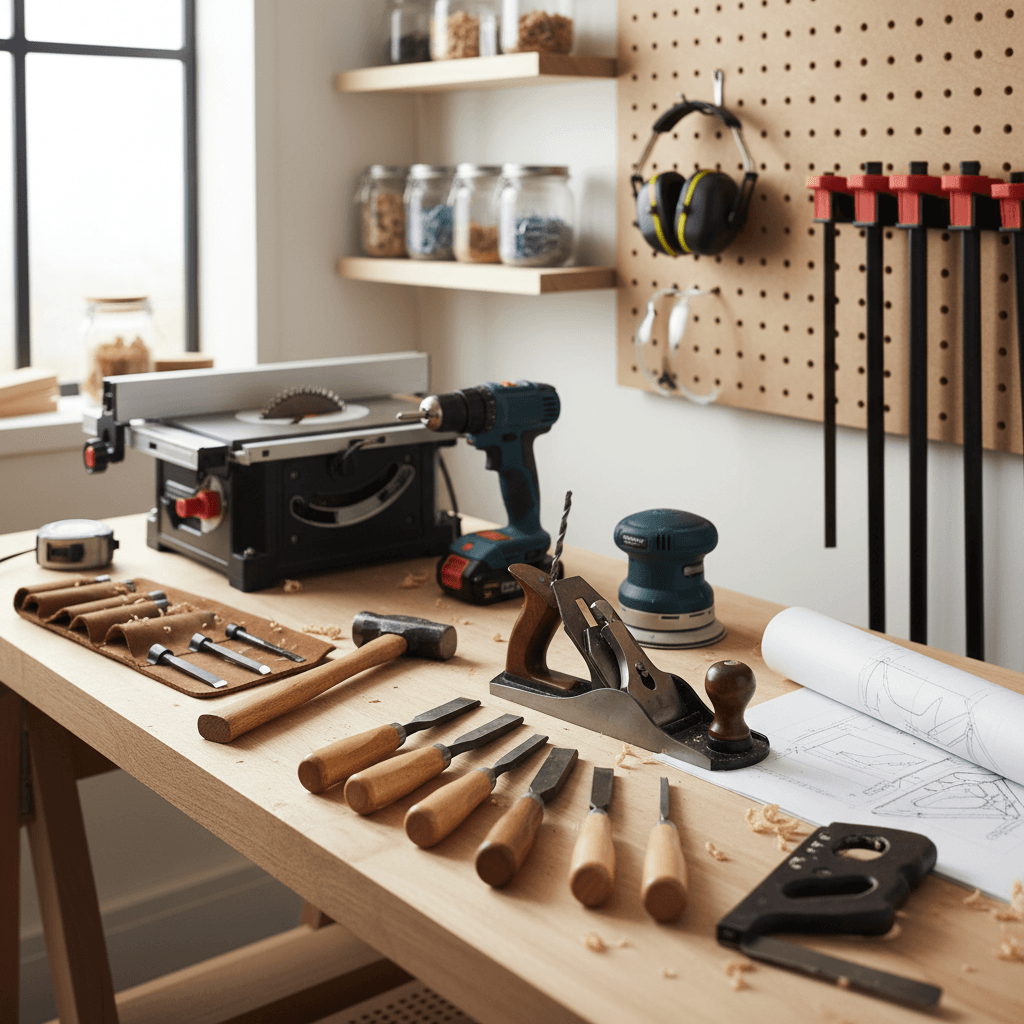
Once your project is assembled, it will likely be covered in pencil marks, glue squeeze-out, and rough patches. The quality of your finishing process often dictates the perceived value of the final piece. A random orbital sander is the workhorse of the finishing stage. An orbital sander uses a dual-action motion to prevent swirl marks from appearing on your wood surface. You will need a variety of sandpaper grits, typically ranging from 80-grit for heavy removal to 220-grit for final smoothing. Progressing through the grits systematically is the only way to achieve a professional-grade finish. After sanding, you will need to apply a protective coating. Whether you choose polyurethane, wax, or oil, the goal is to protect the timber from moisture and wear. For information on sustainable wood sourcing for your finishes, the US Forest Service offers excellent resources. Properly applying a finish preserves the beauty of the wood grain for generations to come.
Workholding and Shop Environment
You cannot work safely or accurately if your wood is sliding around on a table. Workholding is an often-overlooked aspect of woodworking that is vital for both safety and precision. A sturdy workbench is the heart of the shop. It doesn’t have to be fancy, but it must be heavy enough not to move while you are sawing or planing. A solid workbench provides the stable platform required for all high-stakes woodworking operations. You will also need plenty of clamps. In the woodworking world, you can never have too many clamps, as they act as extra sets of hands during complex glue-ups. F-style clamps and pipe clamps are great starting points. Finally, consider your shop’s lighting and ventilation. Bright, shadow-free lighting is essential for spotting defects in your work before they become permanent mistakes. If you have questions about setting up your specific space, feel free to reach out to us directly.
Maintaining Your Tools for Longevity
Your tools are an investment, and they require regular maintenance to perform at their peak. Dull tools are more dangerous than sharp ones because they require more force to use and are prone to slipping. Learning to sharpen your own chisels and plane irons is a rite of passage for every woodworker. A sharp blade cuts through wood fibers like butter, leaving a clean and professional surface. You should also keep your metal tools lightly oiled to prevent rust, especially if your shop is in a humid basement or garage. For technical standards on tool steel and manufacturing, the NIST provides industrial insights. Regular maintenance routines extend the life of your equipment and save you significant money over time.
Conclusion: Building Your Dream Shop One Tool at a Time
Woodworking is a journey of continuous learning and refinement. By starting with the essential tools listed in this guide, you set yourself up for success without breaking the bank. Remember to focus on safety, take your time with measurements, and don’t be afraid to make mistakes—they are often the best teachers in the shop. As you gain confidence, you can expand your collection to include more specialized tools like routers, jointers, and thickness planers. The most important tool in any workshop is the person behind the bench, so keep practicing and refining your craft. We look forward to seeing the incredible projects you create in your new home woodworking shop. Your journey into craftsmanship begins today with just a few well-chosen tools and a passion for creating.